Italy's 3 Michelin Key Hotels
All 13 Italian hotels awarded the Michelin Guide's highest distinction — with insider descriptions, honest context, and VIP booking perks.
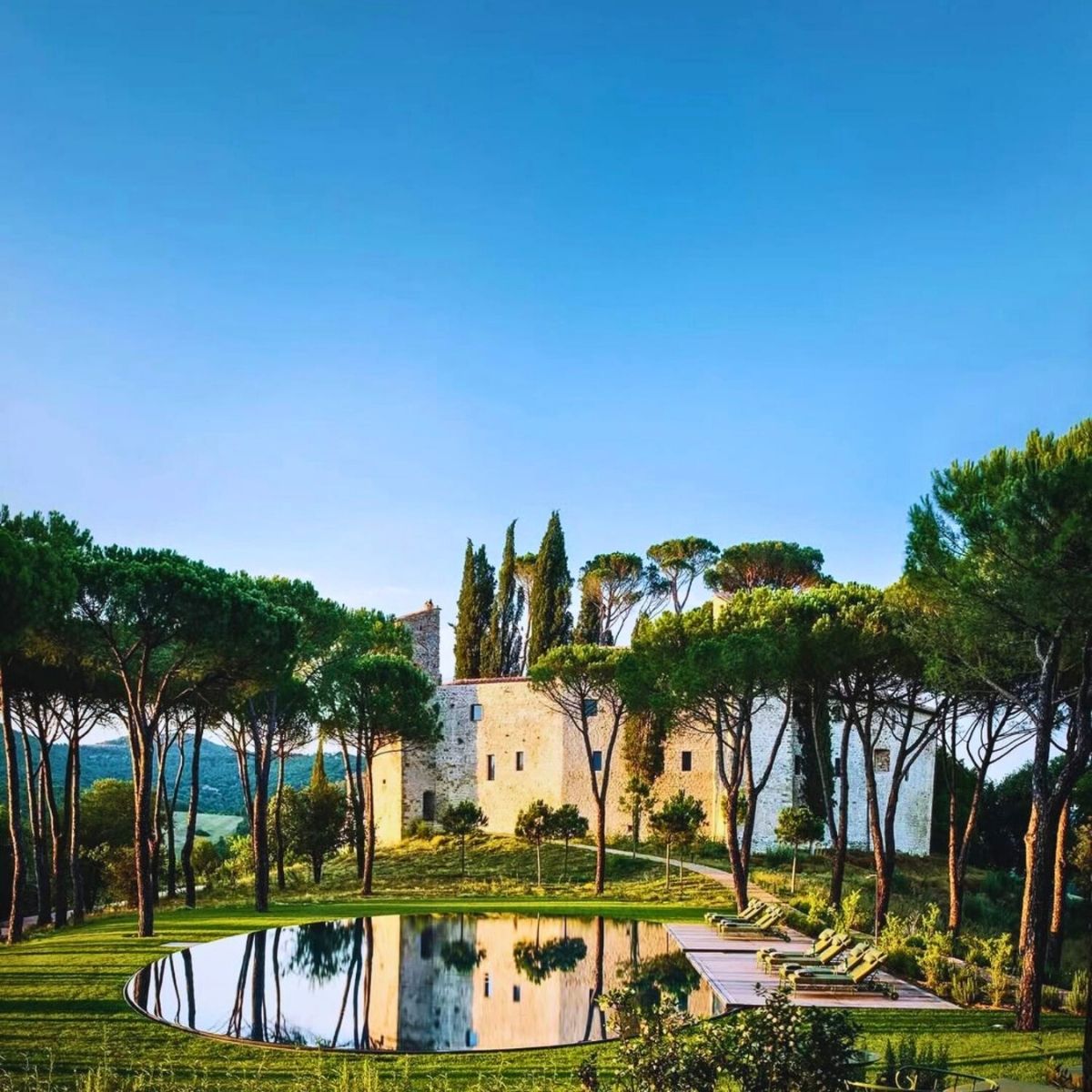
This year, the Michelin Guide did something it had never done before: it rated hotels. And Italy — as it so often does — led the world. 13 hotels across the country earned 3 Michelin Keys, the highest distinction in Michelin's new hotel ranking system, placing Italy among the most decorated nations on the planet for the quality of its extraordinary places to stay.
What earns a hotel three Michelin Keys? According to the guide, it's the combination of exceptional architecture, singular atmosphere, immaculate service, and a stay that transcends the ordinary — one you simply cannot replicate anywhere else. These are not just beautiful hotels. They are experiences that reshape how you understand a place.
From a 16th-century palazzo on Venice's Grand Canal to a cliff-hugging monastery in Sicily where the Ionian Sea glitters and Mount Etna smokes in the distance. From Massimo Bottura's art-filled country house in Emilia-Romagna to the most coveted address on Lake Como. From Capri's most glamorous boutique to a restored 10th-century castle in the Umbrian hills. This is Italy at its most extraordinary — and this guide covers all 13.
"These aren't just the best hotels in Italy. They're among the best hotels on Earth — and every single one of them is worth planning a trip around."
All 13 Hotels at a Glance
| Hotel | Location | Why It Earned Three Keys |
|---|---|---|
| Il San Pietro di Positano Amalfi Icon | Positano, Campania | Cliff-set family-run masterpiece with private beach and Michelin-star dining |
| Borgo Santo Pietro | Chiusdino, Tuscany | 13th-century villa with organic farm, spa, and Michelin-starred restaurant |
| Aman Venice | Grand Canal, Venice | 16th-century palazzo with frescoed ceilings and Aman's signature serenity |
| Rosewood Castiglion del Bosco | Montalcino, Tuscany | Val d'Orcia estate with its own Brunello winery, golf, and villa suites |
| Passalacqua Most Celebrated | Moltrasio, Lake Como | 18th-century lakefront villa — intimate, grand, and endlessly dreamy |
| J.K. Place Capri | Marina Grande, Capri | Effortlessly glamorous boutique perched above the marina with sea views |
| Castello di Reschio | Umbria | Restored 10th-century castle with equestrian trails and spa in wine cellars |
| Casa Maria Luigia | Near Modena | Massimo Bottura's art-filled country house — a culinary pilgrimage destination |
| Corte della Maestà | Civita di Bagnoregio, Lazio | A deeply personal hilltop retreat in Italy's most dramatic "dying city" |
| San Domenico Palace, Four Seasons | Taormina, Sicily | 14th-century monastery overlooking the Ionian Sea and Mount Etna |
| Hotel Cipriani, A Belmond Hotel | Giudecca Island, Venice | Venice's most legendary hotel — private pool, lagoon views, timeless glamour |
| Bvlgari Hotel Roma | Central Rome | Sleek, marble-clad Roman icon with unparalleled service and a rooftop bar |
| Four Seasons Hotel Firenze | Florence | Renaissance opulence meets private gardens — an oasis in the heart of the city |
Amalfi Coast: Where the Mediterranean is at its Most Dramatic
The Amalfi Coast has been producing extraordinary hotels for a century, but only one property earned the Michelin Guide's highest hotel distinction. It is, fittingly, the one that has defined the coast's idea of luxury for generations: a family-run masterpiece built directly into the cliffs of Positano, with a private beach reached by a cliff elevator and a Michelin-starred restaurant suspended above the sea.
No. 01 · Amalfi Coast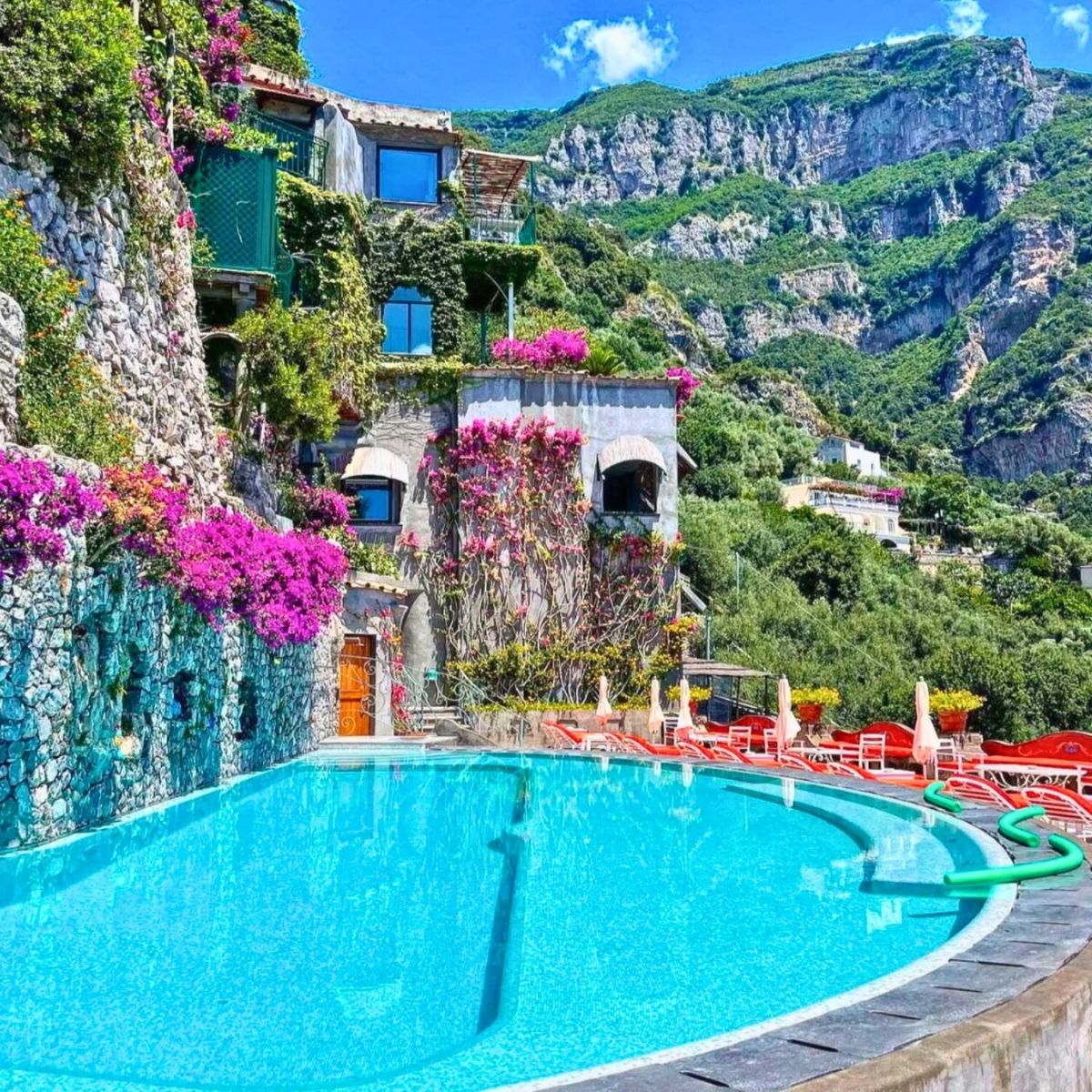
Il San Pietro di Positano is one of those hotels that people describe with the quiet certainty of someone who knows they've experienced something rare. Built almost invisibly into the cliff face just south of Positano's harbor, the property reveals itself only on arrival: terrace after terrace of bougainvillea-draped stone, dropping away to the Tyrrhenian Sea and a private stretch of beach accessible only by elevator through the rock. The restaurant, La Sponda, is Michelin-starred and feels like dining inside a dream. The service is fourth-generation family warmth. This is what the Amalfi Coast has always meant to those who love it most.
Tuscany: Two Hotels, Two Visions of the Perfect Italian Estate
Tuscany earned two 3 Michelin Key hotels in 2025 — and while both sit among cypress-lined hills and produce world-class wine, they represent entirely different fantasies of what a Tuscan escape can be. Borgo Santo Pietro is the organic, holistic, villa-in-the-hills dream. Rosewood Castiglion del Bosco is the grand estate, the winery, the championship golf, the Val d'Orcia in full aristocratic splendor.
No. 02 · Tuscany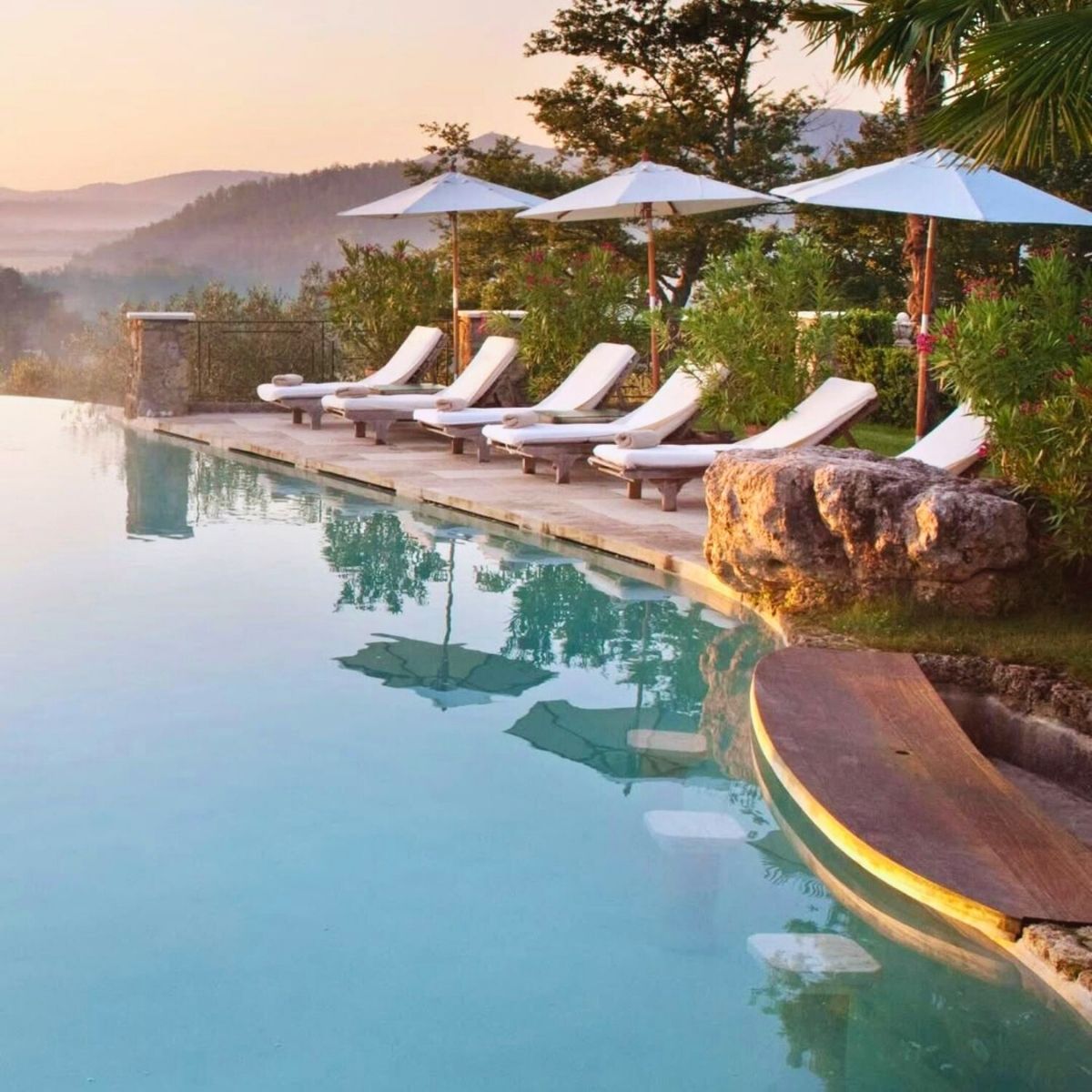
Borgo Santo Pietro is both ancient and alive. The 13th-century stone villa sits in the Maremma hills of southern Tuscany, surrounded by its own vineyards, kitchen gardens, beehives, and orchards that supply the Michelin-starred Meo Modo restaurant. The spa draws on Tuscan herbal traditions. The cooking school runs across seasons. Helicopter tours take guests over the hilltop towns of Siena province. It is, in the best possible sense, a self-contained world — one where luxury and land are inseparable.
No. 03 · Tuscany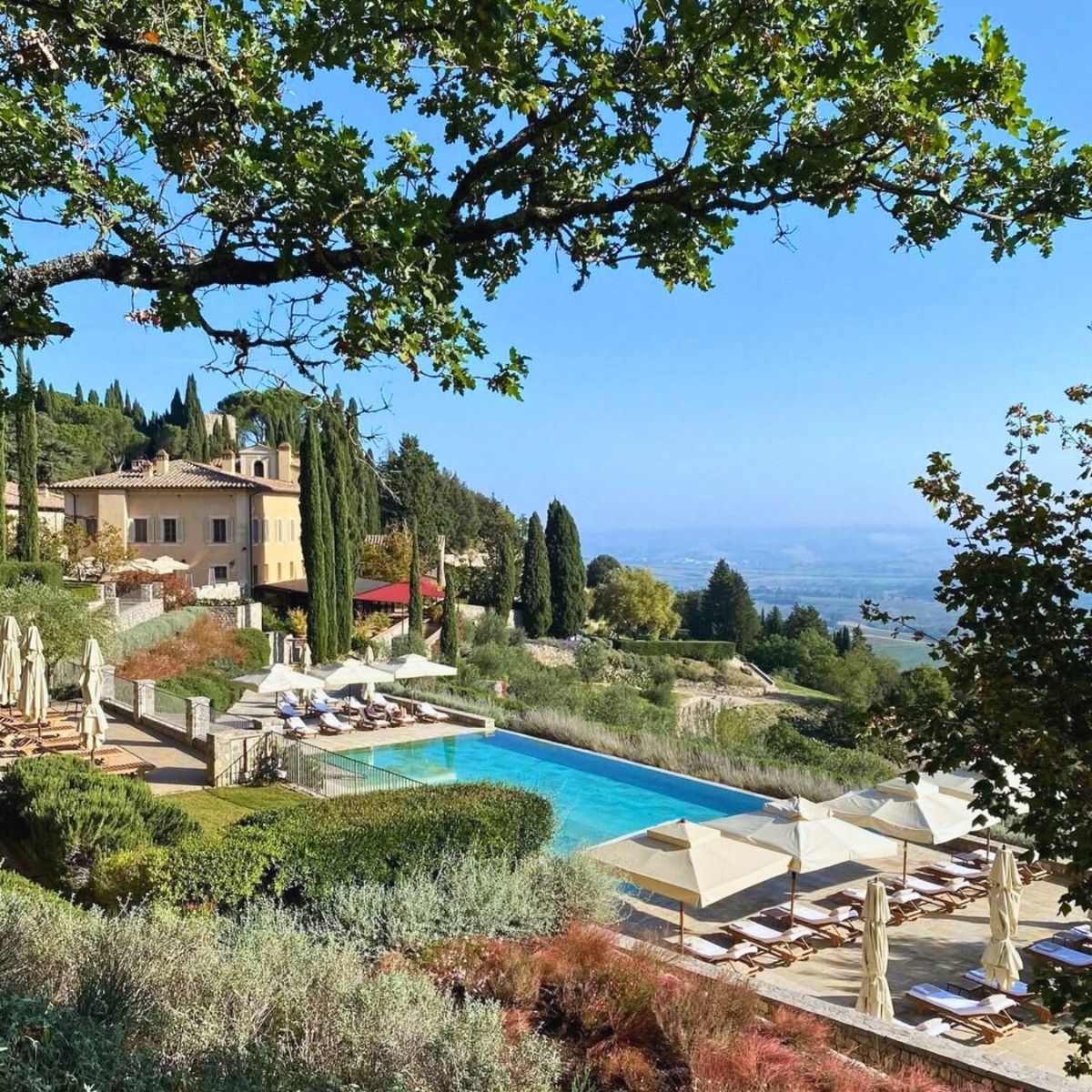
Rosewood Castiglion del Bosco occupies one of the most coveted patches of land in all of Italy: a 4,200-acre UNESCO World Heritage estate in the Val d'Orcia, with its own medieval village, its own chapel, and its own certified Brunello di Montalcino winery. Guests sleep in restored stone farmhouses and villas scattered across the estate. The golf course was designed by Tom Weiskopf. The spa draws on mineral waters from Montalcino's ancient thermal springs. This is an estate that has been producing wine since the 12th century — and now it produces one of the world's great hotel experiences.
Venice: Two Palaces, Two Legends
Venice gave the 2025 Michelin Guide two of its most storied recipients — a 16th-century palazzo where Aman brought its meditative minimalism to frescoed Grand Canal rooms; and a private island hotel on Giudecca where the pool remains the only private outdoor pool in Venice and where legends of the 20th century once stayed.
No. 04 · Venice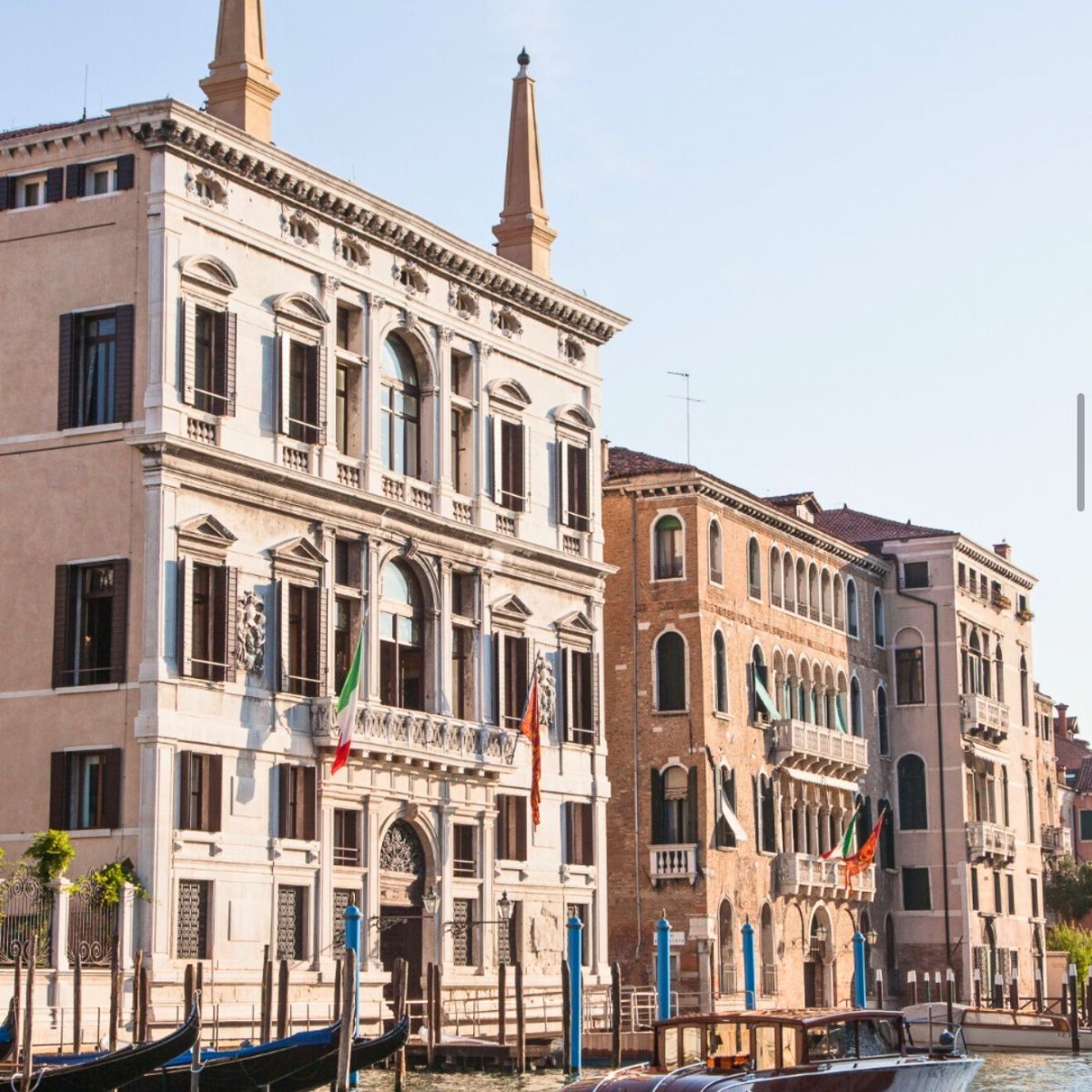
The Palazzo Papadopoli has stood on the Grand Canal since the 16th century. Under Aman's stewardship since 2013, it has been transformed into something paradoxical: a Venetian palazzo of immense historic weight that feels utterly calm. The frescoed ceilings are original; the atmosphere is Aman's distinctively meditative quiet. Private gardens face the canal — extraordinary in a city where outdoor space is a luxury. The spa draws on local Veneto traditions. The property offers art restoration tours, private boat trips, and exclusive after-hours access to the city's museums. This is Venice experienced at a pace the city rarely allows.
No. 05 · Venice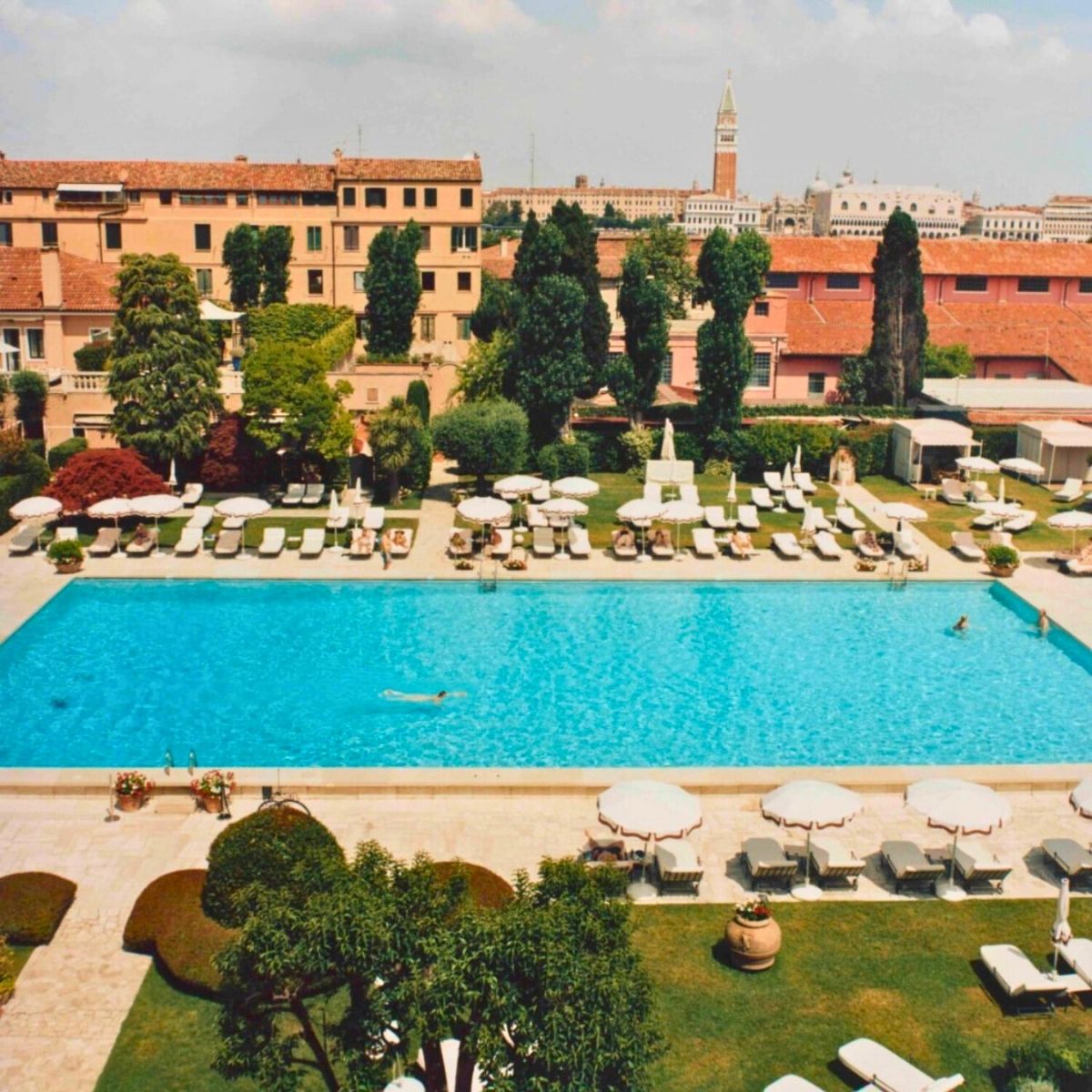
Hotel Cipriani opened on the island of Giudecca in 1958, and it changed what Venice could be for the luxury traveler. Separated from the city by 300 meters of lagoon, arriving by private boat, the Cipriani has always operated on its own terms — a garden hotel with a private pool, a tennis court, and a sense of absolute remove from the crowds of St. Mark's Square. Under Belmond's stewardship it retains its legendary status. The pool, the terrace dining at Oro restaurant, the lagoon views at dusk — this is why people have been coming to the Cipriani for nearly 70 years.
Lake Como: The World's Most Talked-About Hotel
Passalacqua has, since its opening in 2022, become perhaps the most discussed luxury hotel in the world. It was immediately named the World's Best Hotel at the World's 50 Best Hotels awards in 2023. Its Michelin recognition is, for most who have stayed there, entirely deserved — and perhaps even overdue.
No. 06 · Lake Como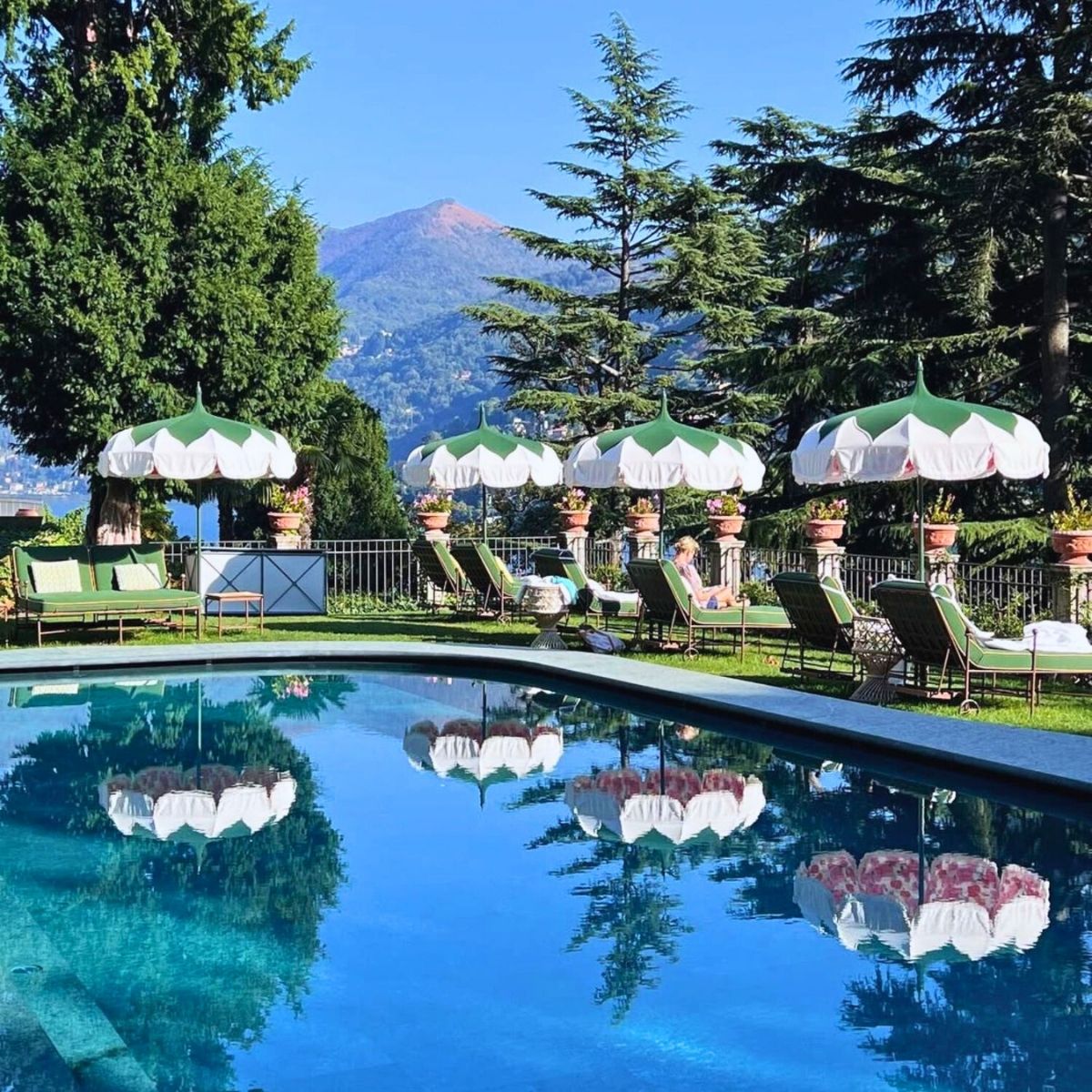
What makes Passalacqua so remarkable is not any single amenity — it's the extraordinary accumulation of details and the feeling, from the first moment, of being genuinely cared for. The 18th-century villa was once home to Vincenzo Bellini, who composed La Sonnambula here in its gardens. Today it has just 24 rooms and suites, terraced gardens descending to a private dock, a lakeside pool, and a culinary program that draws on the produce of the estate and the fishermen of Lake Como. There is no hotel on Lake Como — and perhaps in Italy — quite like it.
Capri: Island Glamour at its Most Refined
Capri has always attracted a certain kind of traveler: those for whom beauty is a necessity and style is a language. J.K. Place Capri speaks that language fluently. Perched above Marina Grande with panoramic views of the Faraglioni rocks and the Gulf of Naples, it is the island's most chic address — and one of Italy's 13 most exceptional hotels.
No. 07 · Capri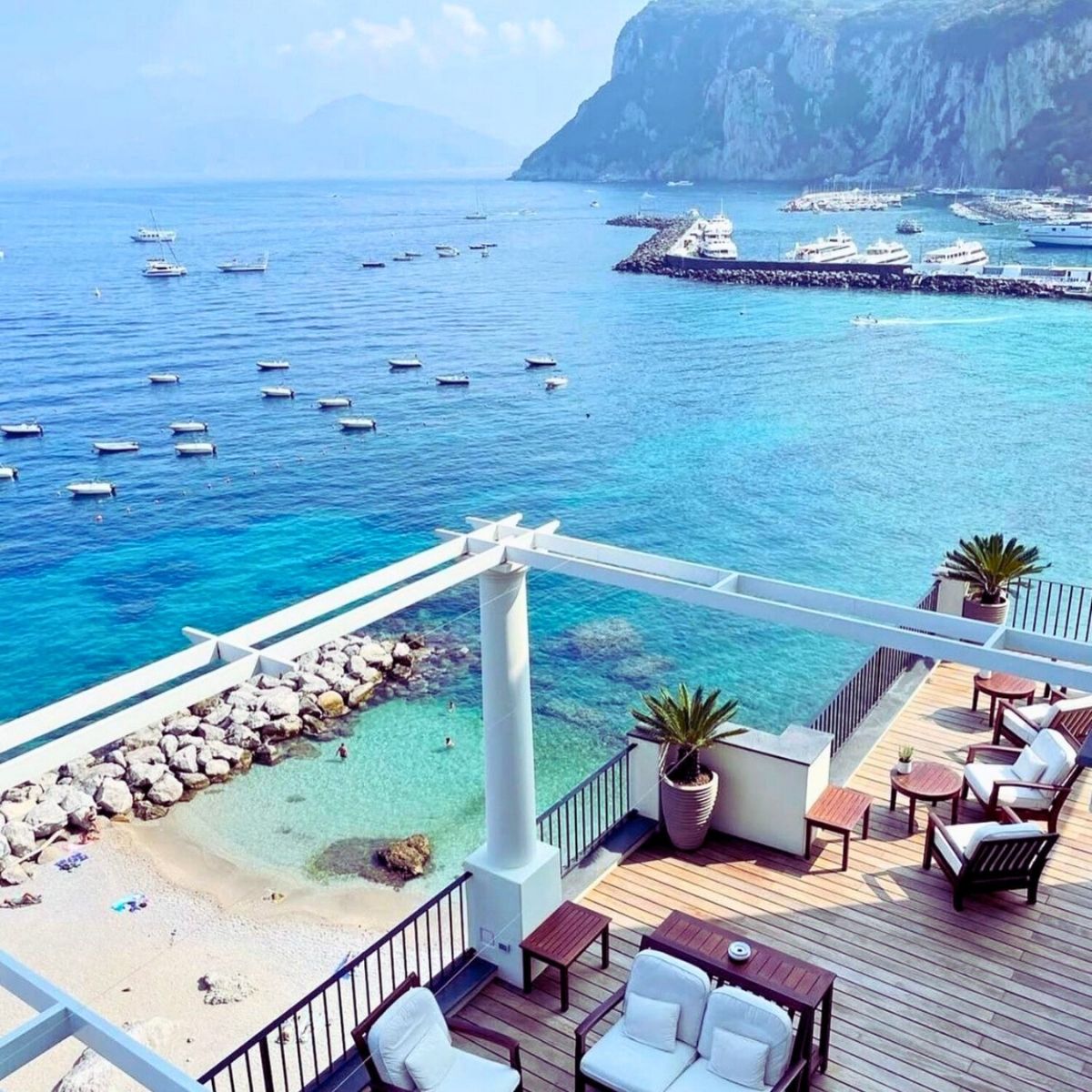
J.K. Place Capri opened in 2006 and immediately became the island's most coveted address for guests who want beauty without ostentation. The property has just 22 rooms and suites, all designed by Michele Bönan in a palette of whites, blues, and warm linen. The terrace pool overlooks the marina and, on clear days, the Amalfi Coast in the distance. The JK Spa is intimate and excellent. But the real point of J.K. Place Capri is the feeling it cultivates: of being on a private island, moving at the pace of the tides, with impeccable taste in every direction you look.
Umbria: Italy's Best-Kept Secret, Elevated
Umbria rarely appears on first-time Italy itineraries — and that is its greatest gift. Quieter than Tuscany, deeper in history, and astonishingly beautiful in a way that feels undiscovered even when it isn't. Castello di Reschio, an hour from Perugia in the hills above Lake Trasimeno, is the kind of place that makes guests wonder why they spent so long going elsewhere.
No. 08 · Umbria
Castello di Reschio is a family project on an extraordinary scale. The Bolza family acquired the derelict 10th-century castle and its surrounding 1,500-hectare estate in 1994 and spent nearly three decades restoring it into one of Europe's most extraordinary hotel and estate experiences. The 36 rooms and suites are each individually designed by Antonio Bolza. The equestrian center is among Italy's finest. The spa is set inside the original wine cellars, carved from the hillside rock. And the surrounding Umbrian countryside, visible from every window and terrace, is the region at its most undisturbed.
Emilia-Romagna: When a Meal Becomes a Destination
Casa Maria Luigia is the only hotel on this list where the primary reason to visit might be a meal. But when that meal is created by Massimo Bottura — the chef behind Osteria Francescana, repeatedly named the world's best restaurant — "the meal" becomes something closer to a transformative cultural experience.
No. 09 · Emilia-Romagna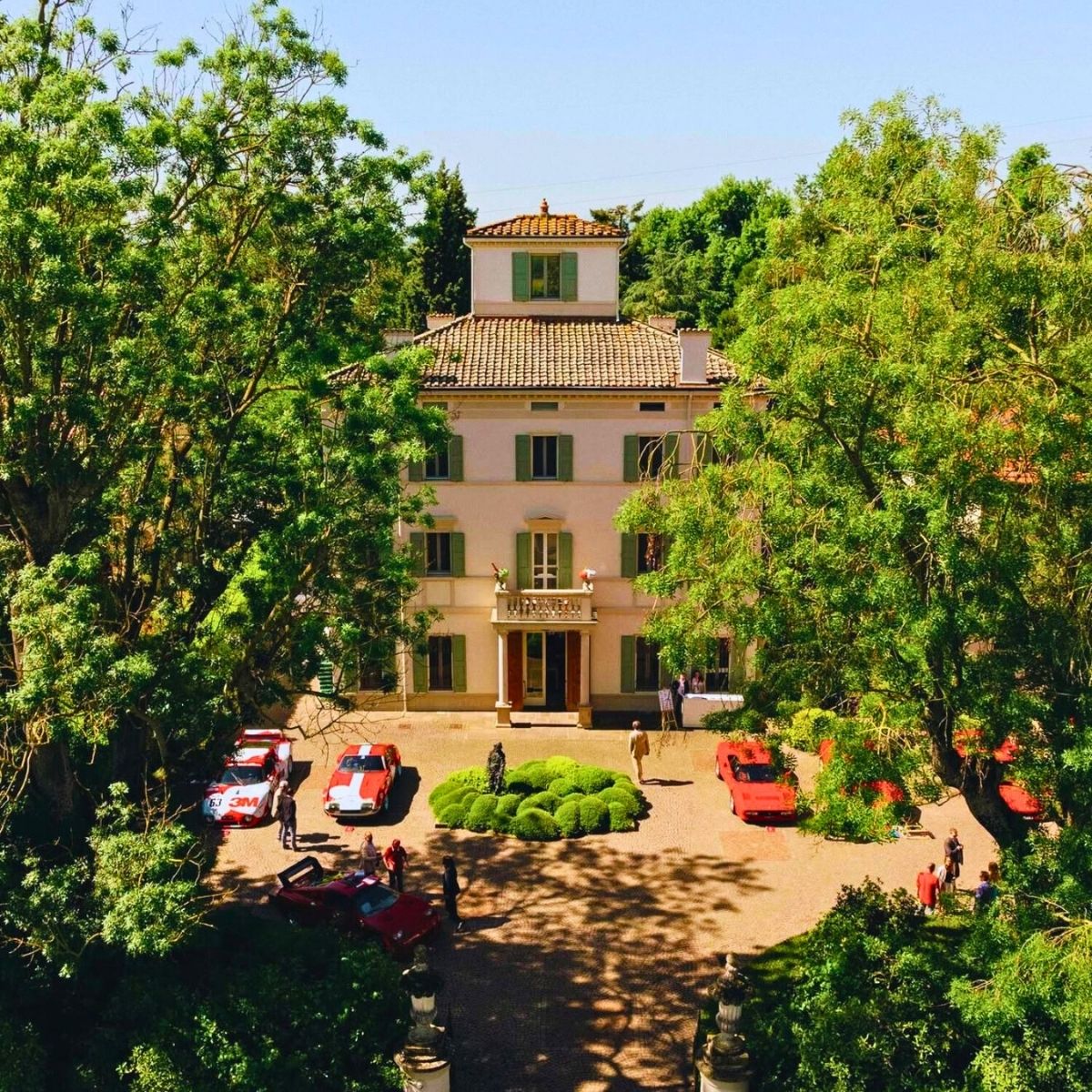
Casa Maria Luigia was created by Massimo Bottura and his wife Lara Gilmore as an extension of the culture they built at Osteria Francescana. The 12-room country house 15 minutes outside Modena is filled with contemporary art from their personal collection. Bottura's culinary experiences here are distinct from the restaurant: more personal, more pedagogical, set against the rhythms of a working estate. The gardens, the tennis court, the pool, the bicycles for cycling into the Emilian countryside — all of it feeds the same impulse: to understand Italy through the senses, one extraordinary mouthful at a time.
Lazio: A Fairytale in the "Dying City"
Civita di Bagnoregio is one of Italy's most surreal and beloved places: a medieval hilltop village perched on a crumbling tuff rock plateau, accessible only by a long pedestrian bridge, slowly eroding into the valley below. It has been called the "dying city" for centuries. Corte della Maestà is its only hotel — and one of the most singular stays in the world.
No. 10 · Lazio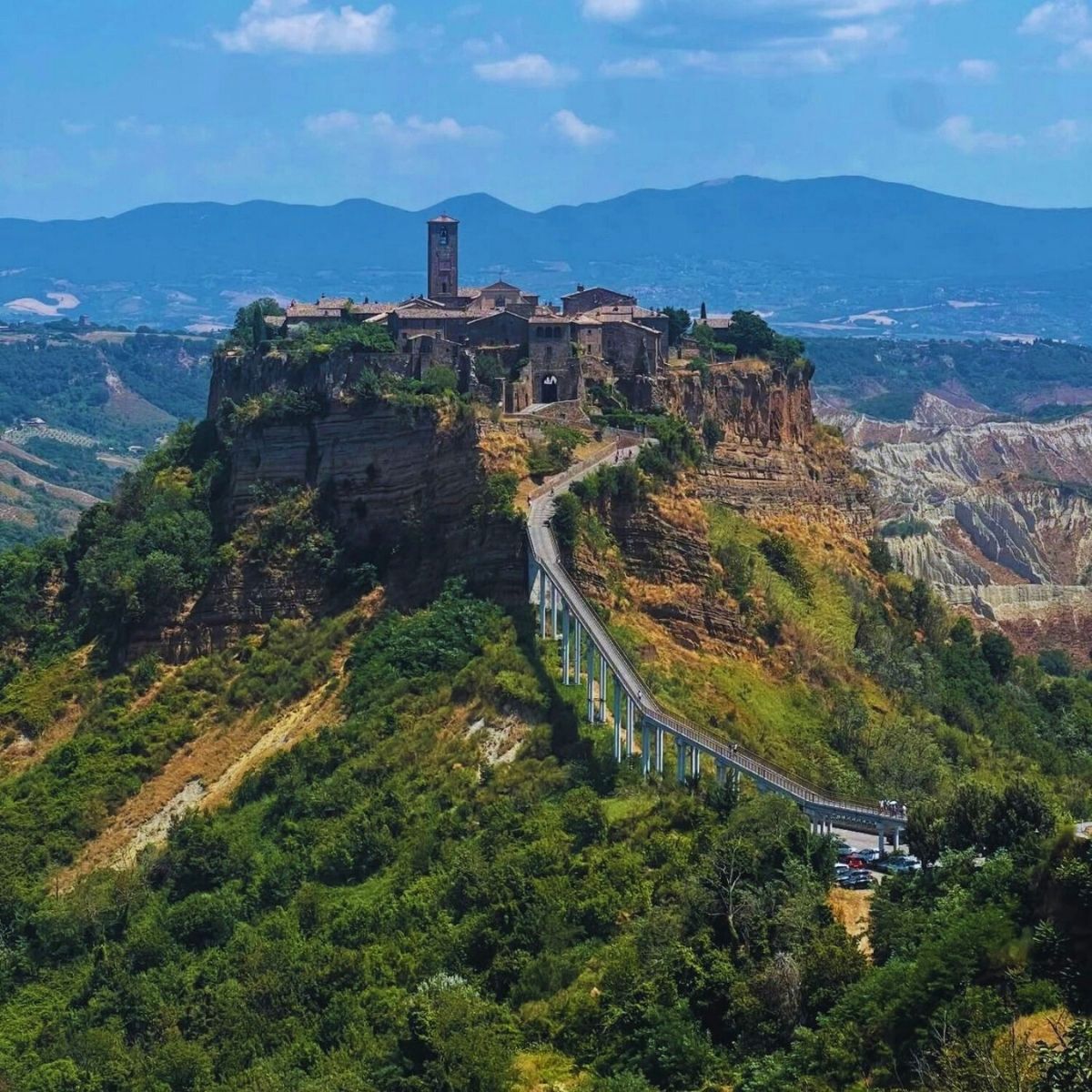
Corte della Maestà earns its three Michelin Keys through the rarest of hospitality qualities: complete singularity. There is nowhere else like Civita di Bagnoregio. There is no other hotel within its walls. Guests cross the pedestrian bridge at dusk, the valley glowing orange below, and arrive in a village that has been inhabited for 2,500 years and where the evenings are so quiet you can hear the wind against the tuff cliffs. The hotel's curated art, bespoke experiences, and wine cellar are extraordinary — but the setting is irreplaceable.
Sicily: Cinema, History, and the Ionian Sea
San Domenico Palace in Taormina is one of the most visually iconic hotels in the world — a 14th-century Dominican monastery perched on a cliff above the Ionian Sea, with Mount Etna smoking in the distance. Under Four Seasons management since 2021, it became the backdrop of season two of The White Lotus — and suddenly the whole world wanted to know how to book a room.
No. 11 · Sicily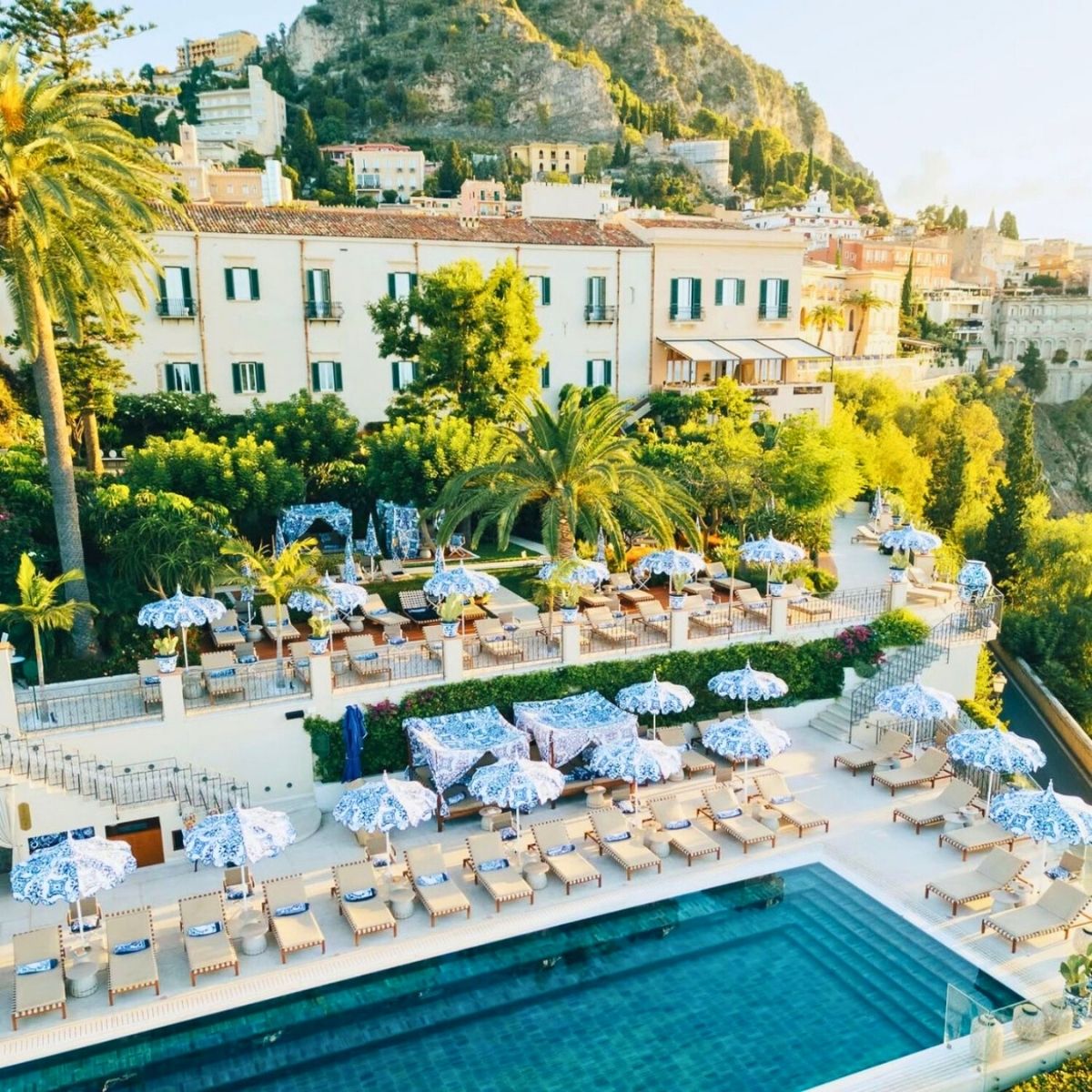
The Dominican monks who built San Domenico in 1374 could not have anticipated that their church and cloister would one day become one of the world's most celebrated hotels — but the architecture they created, with its cloistered gardens, frescoed corridors, and clifftop position above the sea, was already extraordinary. Four Seasons has honored that history while elevating every operational element: the Michelin-starred Principe Cerami restaurant, the infinity pool above the Ionian, the spa, and the seamless blend of monastic history with contemporary Five Star service.
Rome: Modern Luxury Meets Ancient Heritage
Bvlgari Hotel Roma is the Eternal City's most contemporary luxury statement — and one of the most architecturally considered hotels to open in Europe in the last decade. Situated in the historic center near Piazza Augusto Imperatore, it is both a temple to Roman heritage and a manifesto for what Italian luxury can look like when it is modern, confident, and entirely without nostalgia.
No. 12 · Rome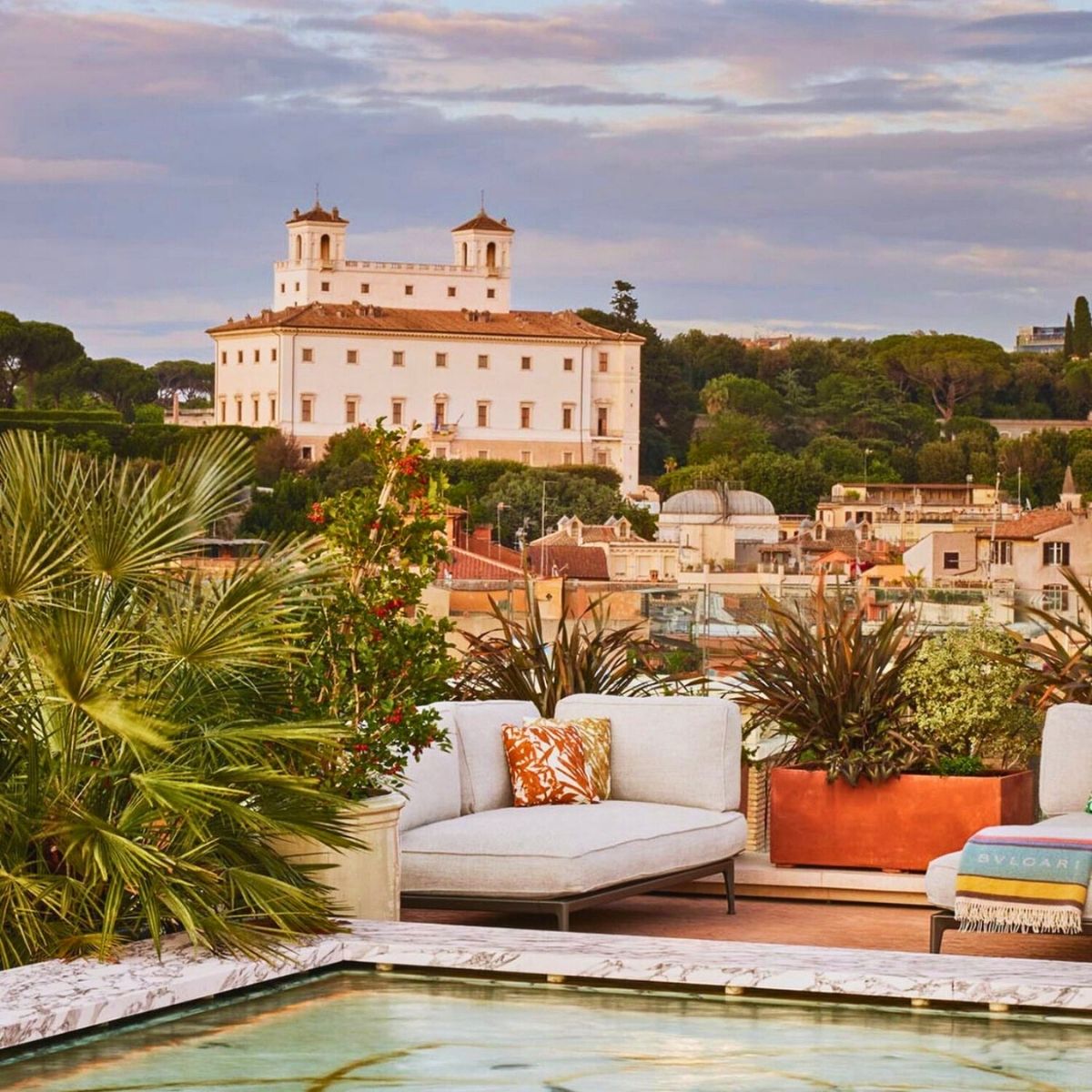
Bvlgari Hotel Roma opened in 2023 — the latest in the Bvlgari Hotel Collection that has already produced exceptional properties in Milan, Dubai, and London. In Rome, the hotel occupies a purpose-built palazzo in the historic center, clad in travertine and Roman tufa, referencing the materiality of the ancient city without imitation. The interiors, by Antonio Citterio Patricia Viel, use Bvlgari's jewellery archive as design inspiration throughout. The rooftop bar is one of the finest in Rome. The Bvlgari Spa is among the city's best.
Florence: The Renaissance, Perfected
Four Seasons Hotel Firenze is, in many respects, the ideal Florence experience: a Renaissance palazzo surrounded by the largest private garden in the city, close enough to the Duomo to walk, calm enough to feel like a world apart. It has been one of Italy's benchmark luxury hotels since it opened in 2008. The Michelin Key is the recognition it has long deserved.
No. 13 · Florence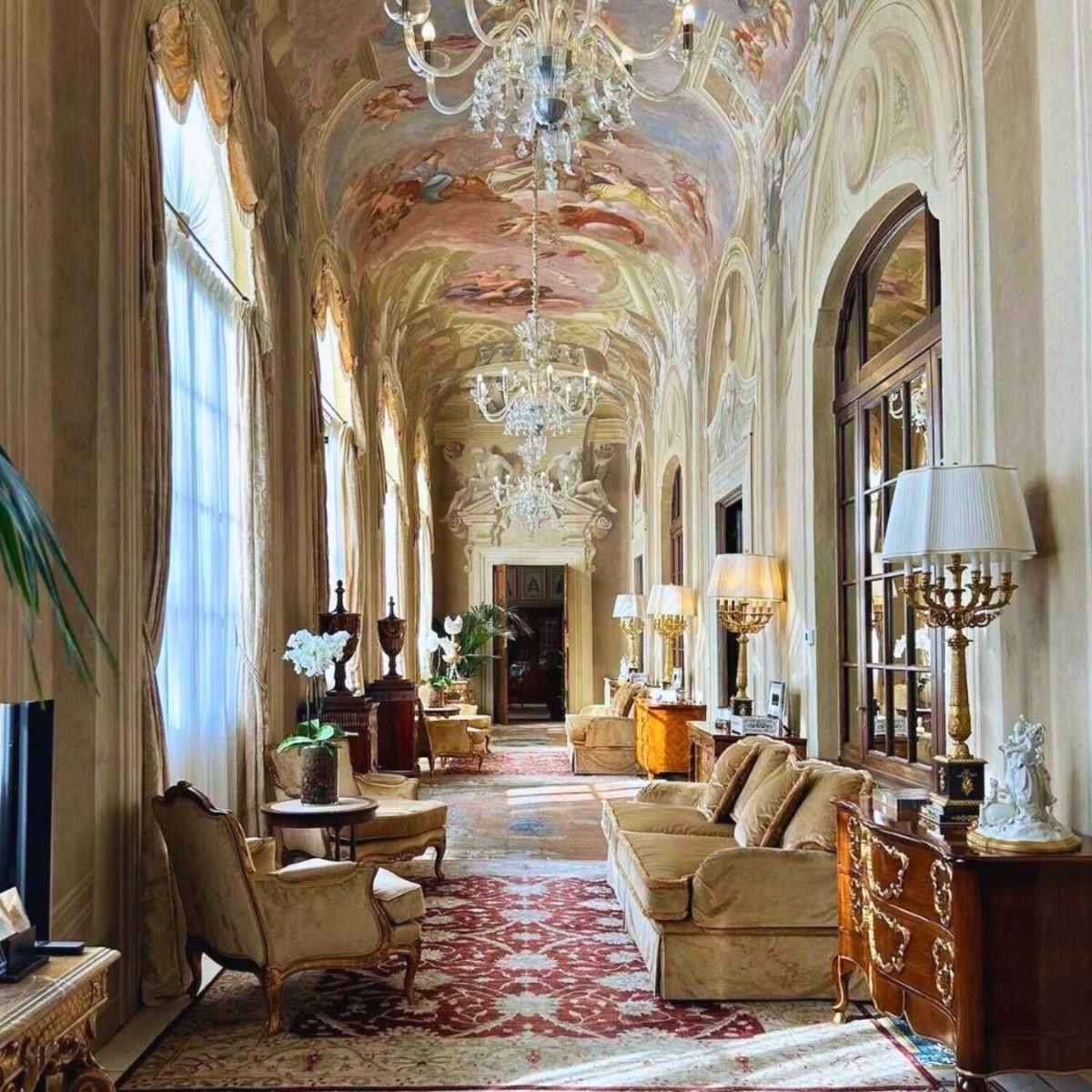
Four Seasons Hotel Firenze occupies two adjacent 15th-century buildings — the Palazzo della Gherardesca and a former convent — connected by Italy's largest private hotel garden. The four-and-a-half acres of park are extraordinary in a city where outdoor space is a luxury almost no hotel can offer: centuries-old trees, clipped hedges, fountains, and the absolute stillness of a private garden steps from the Duomo. The Michelin-starred Il Palagio restaurant serves some of the finest food in Tuscany. And the frescoed bedrooms, each different and each remarkable, make this one of the most visually extraordinary hotel stays in Italy.
Planning Your Michelin Key Italy Trip
How to Get There
Italy's major gateway airports are Rome Fiumicino (FCO), Milan Malpensa (MXP), Venice Marco Polo (VCE), Florence (FLR), Naples (NAP), and Catania (CTA) for Sicily. Most of the properties on this list are within 30–120 minutes of a major airport, and all are best reached by private transfer arranged through your hotel or travel advisor. Trains connect Rome, Florence, Venice, and Milan efficiently — several of these hotels sit walking distance from city train stations.
When to Visit
For Lake Como and Tuscany, May through June and September through October offer ideal weather with fewer crowds than peak summer. The Amalfi Coast and Capri are best in late May or September — swimmable, beautiful, and manageable. Rome, Florence, and Venice reward visits in spring and autumn; summer is hot and very crowded. Sicily is magnificent in May, June, and September. Umbria and Emilia-Romagna are wonderful year-round with a particular magic in autumn harvest season.
Combining Multiple Properties
One of the great pleasures of planning a Michelin Key Italy itinerary is the combination potential. A natural arc runs north to south: Lake Como → Florence (Four Seasons Firenze or Rosewood Castiglion del Bosco) → Rome (Bvlgari) → Capri (J.K. Place) → Amalfi (Il San Pietro). For a more adventurous pairing, consider Civita di Bagnoregio (Corte della Maestà) between Rome and Tuscany — one of the most memorable overnight stops in Italy. And the culinary pilgrimage from Casa Maria Luigia in Modena down through Tuscany to Florence makes for an exceptional food-focused journey.
Michelin Key Hotels Italy: FAQs
Everything you need to know about the Michelin Guide's hotel rating system — and how to book these extraordinary Italian properties with VIP perks included.
Michelin Stars are awarded for restaurant quality specifically. The Michelin Guide launched its hotel rating system — the Michelin Keys — separately in 2024, as a way to extend its expertise to the overall hotel experience. Keys evaluate the architecture, design, atmosphere, service quality, and the distinctiveness of the stay itself. A hotel can hold three Michelin Keys while also having a Michelin-starred restaurant on property — as several on this list do. Three Keys is the maximum distinction, awarded only to hotels offering a genuinely exceptional and irreplicable experience.
In the 2025 Michelin Guide, 13 hotels across Italy were awarded 3 Michelin Keys — the highest possible distinction. They are spread across nine distinct regions: Campania (Amalfi Coast and Capri), Tuscany (two hotels), Veneto (two hotels in Venice), Lombardy (Lake Como), Umbria, Emilia-Romagna, Lazio, Sicily, and Rome. Italy is one of the most-decorated nations in the Michelin hotel ranking globally.
For sheer romance, Il San Pietro di Positano on the Amalfi Coast is unmatched — it has been one of Italy's great honeymoon addresses for decades. Passalacqua on Lake Como is extraordinary for couples who want a more intimate, villa-like experience with stunning water views. J.K. Place Capri is perfect for those who want island glamour. And Castello di Reschio in Umbria offers the most private and immersive countryside experience of the group. I love helping couples combine two of these properties into a multi-destination Italian honeymoon — reach out if you'd like help building one.
Yes — as a travel advisor I can access preferred partner programs at many of these properties, including complimentary daily breakfast, room upgrades when available, resort credits, early check-in, and late checkout. You pay the same rate you'd pay booking directly with the hotel — you just arrive to more included. Contact me here and I'll get you booked.
In relative terms, Corte della Maestà in Civita di Bagnoregio and Casa Maria Luigia near Modena represent the most accessible price points on this list, both starting from approximately €600–€800 per night. While no hotel on this list is inexpensive, these two offer the Michelin Key distinction at a lower entry price than the Amalfi Coast, Venice, or Capri properties. That said, the experience at all 13 is extraordinary — and the lower-priced options are not lesser in any meaningful way.
Casa Maria Luigia near Modena is the most concentrated food-and-hotel experience: Massimo Bottura's culinary program is the entire reason for the hotel's existence. San Domenico Palace (Four Seasons, Taormina) has a Michelin-starred restaurant on property. Borgo Santo Pietro's Meo Modo is Michelin-starred. And the Four Seasons Hotel Firenze's Il Palagio is one of Tuscany's finest dining rooms. For a dedicated culinary itinerary that combines multiple Michelin-starred experiences with these hotel stays, I'd love to build one for you.
Final Thoughts: Planning Your Michelin Key Italy Trip
Italy's 13 three-Michelin-Key hotels represent something remarkable: a country that has been producing extraordinary places to stay for centuries, finally formally recognized by the world's most trusted hospitality authority. From the cliff-face drama of Il San Pietro to the quiet perfection of Passalacqua; from the medieval intensity of Corte della Maestà to the contemporary confidence of Bvlgari Roma — these are 13 different answers to the same question: what does truly exceptional hospitality feel like?
Each one is worth a trip in its own right. Many are worth combining. A Lake Como opening followed by a Florentine midpoint and an Amalfi Coast finale. A Sicilian journey that ends with a few nights in Taormina overlooking the Ionian Sea. A food lover's tour that runs from Modena's Casa Maria Luigia down through Tuscany to Rome. The geography of Italy — endlessly varied, endlessly beautiful — makes planning these itineraries one of the genuine pleasures of my work.
"Italy has always known how to make people feel at home in the most extraordinary way. These 13 hotels are the proof — and the invitation."