The Ultimate Guide to the Best Places to Visit in Sicily
Sicily's 11 greatest must-see destinations, ancient Greek temples, Baroque masterpieces, volcanic islands, and dramatic coastlines, with hours, prices, how to get there, and insider tips from a travel advisor.
Sicily is the Mediterranean's greatest travel secret. An island of staggering complexity where ancient Greek temples, Arab-Norman cathedrals, Baroque piazzas, volcanic islands, and some of Italy's most extraordinary coastline exist within a single island. It is larger, older, and more layered than most visitors expect, and the range of remarkable things to see and do defies simple categorization.
This guide cuts through the overwhelm with a focused, practical look at Sicily's 11 most essential and unmissable destinations. Each one covered with what makes it special, exactly what to see, when to go, practical details (hours, prices, websites), and the insider tips that make the difference between a good visit and a genuinely memorable one. Whether you're planning your first Sicily trip or returning to fill in the gaps, these are the places that define the island and reward everyone who visits them properly.
All 11 locations are spread across Sicily's distinct regions, including the western coast, the Aeolian Islands, the southern interior, the Baroque southeast, and the glamorous east. As a result, this guide doubles as a practical planning tool for any Sicily itinerary length.
"Sicily is where Ancient Greece, Arab civilization, Norman conquest, and Italian Baroque meet, and the result is one of the most extraordinary travel destinations on earth."
Best Time to Visit Sicily's Greatest Sights
The experience of these locations varies enormously by season. Ancient outdoor sites like the Valley of the Temples and Teatro Antico in Taormina are best visited outside summer's peak heat. Vulcano's ferry services and hiking conditions peak from May through October. Indoor architectural masterpieces like the Palatine Chapel are good year-round.
Sicily by Season: When to Visit
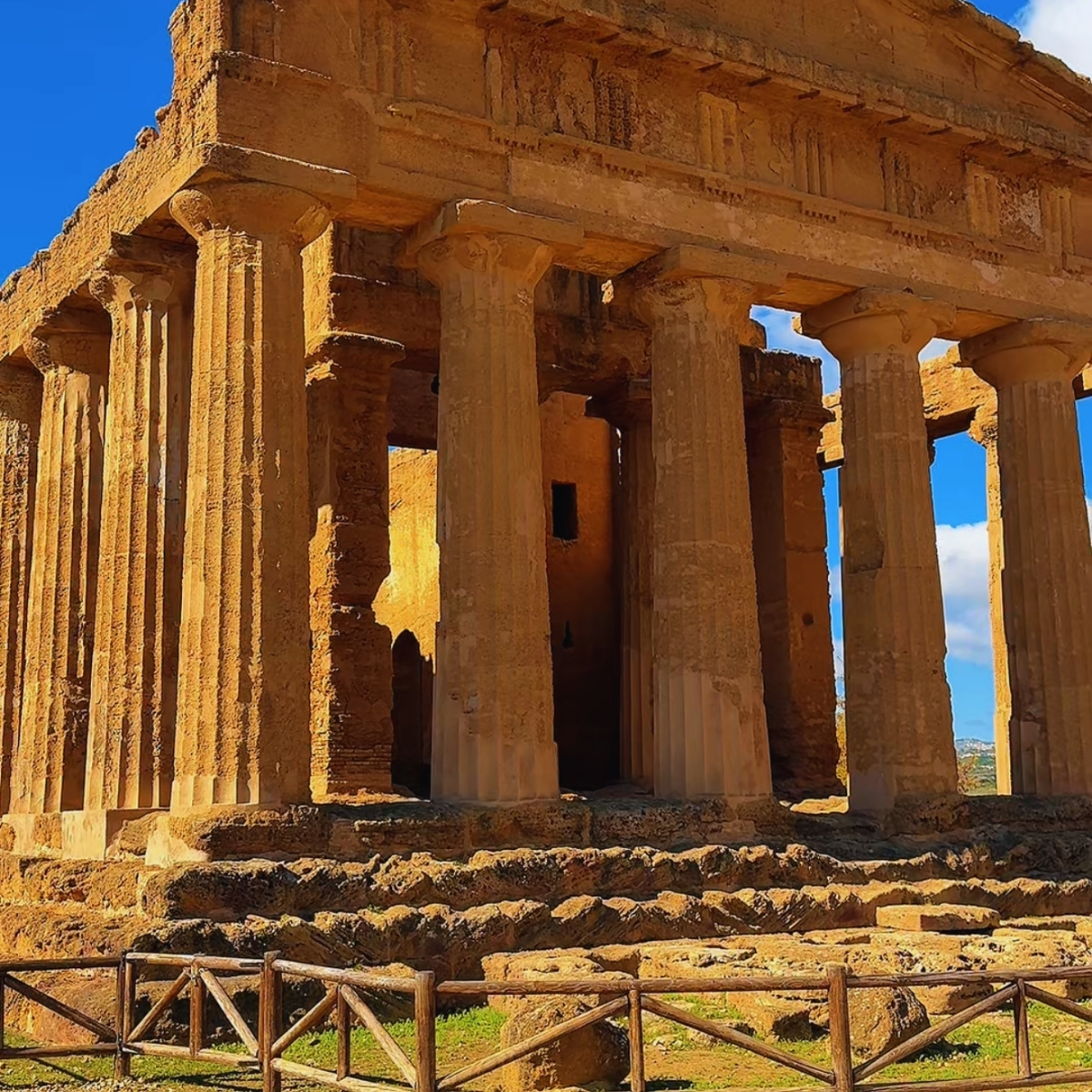
The Valley of the Temples in Agrigento is one of the ancient world's most extraordinary surviving monuments. It's a UNESCO World Heritage Site containing some of the best-preserved Greek Doric temples anywhere on earth, including structures more complete than most temples that survive in Greece itself. Dating from the 5th century BC, the site covers a vast area of olive and almond groves with sea views stretching toward the horizon. This is not just Sicily's finest historical site; it is one of the greatest archaeological experiences anywhere in the Mediterranean.
- Temple of Concordia, the star of the site and one of the best-preserved Greek temples in the world, dating to 430 BC. Its near-complete state is extraordinary; walk around the full peristyle to appreciate the scale.
- Temple of Juno (Hera Lacinia), positioned at the eastern end of the ridge, with sweeping countryside and sea views. The fire-reddened stonework dates from a Carthaginian attack in 406 BC.
- Temple of Heracles, the oldest temple in the valley (~510 BC), now partially restored. Eight columns were re-erected in 1924; the rest lie dramatically fallen among the wildflowers.
- Garden of Kolymbetra, an ancient garden restored by the FAI (Italian National Trust) between the temples, lush with citrus, olives, and seasonal wildflowers. A serene and beautiful contrast to the stone ruins.
- Sunset and golden hour visits, the Temple of Concordia in the amber light of late afternoon is one of Sicily's most transcendent visual experiences. Staying at Villa Athena (inside the park) gives private access at dawn and dusk.
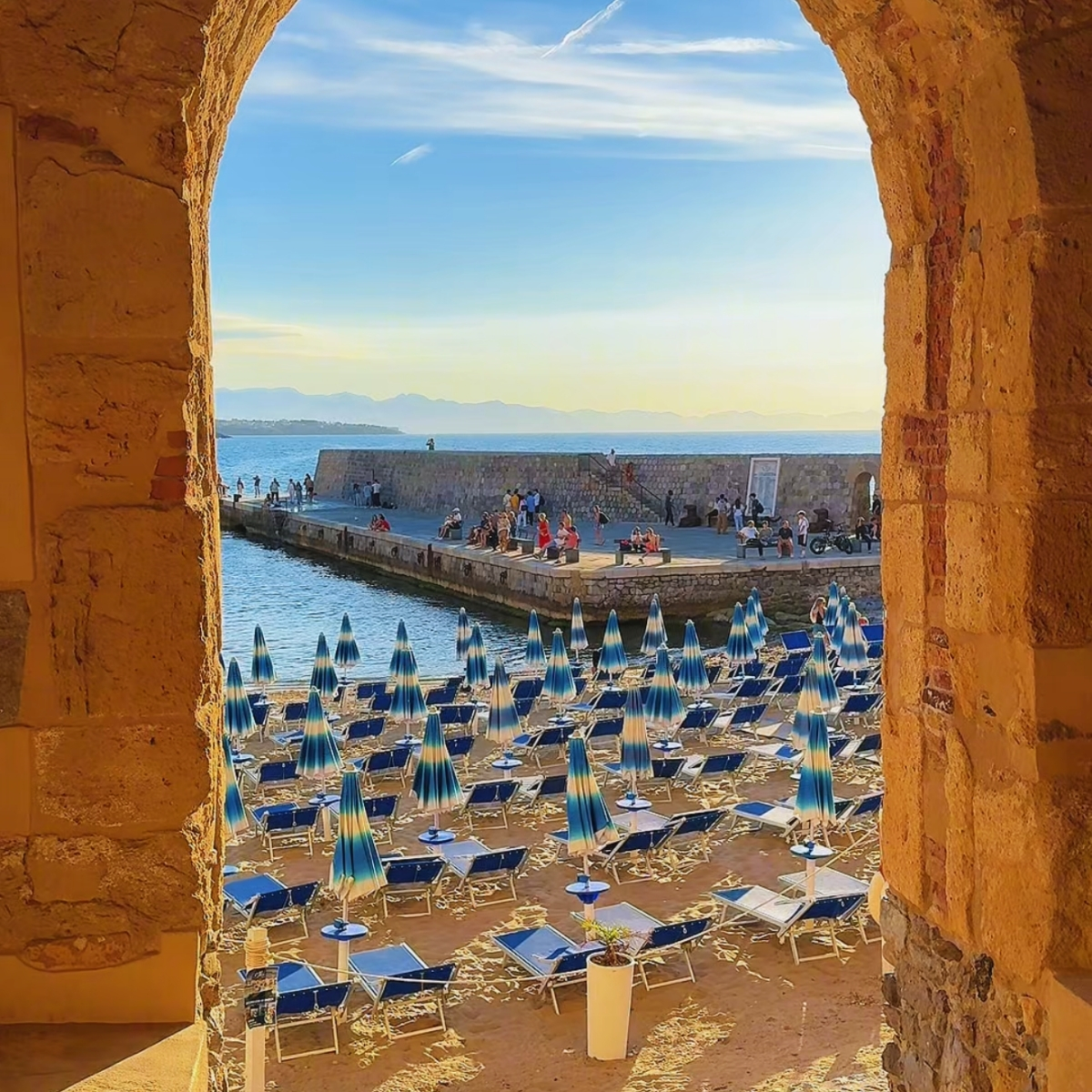
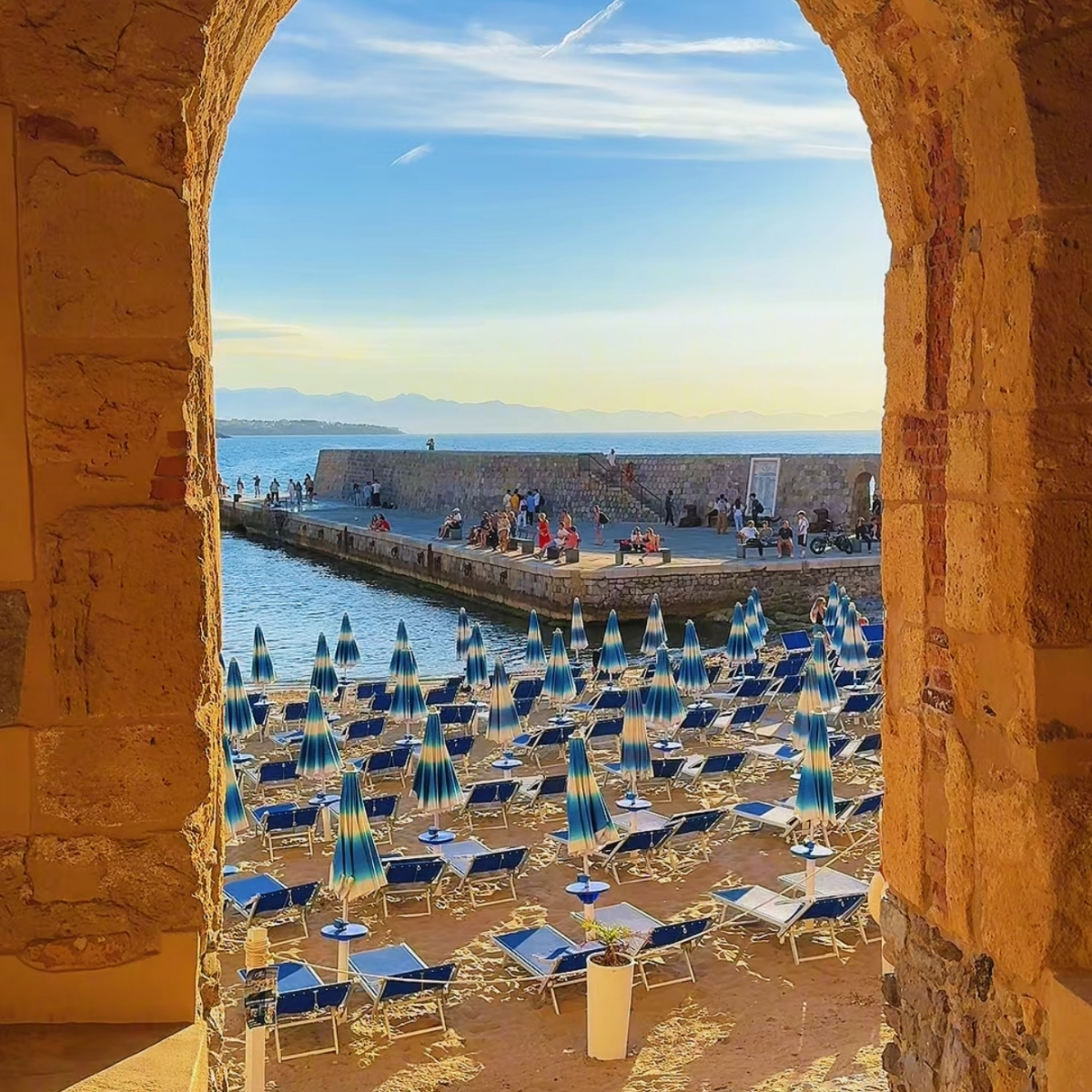
Porta Pescara is the ancient medieval stone arch that served as the gateway for Cefalù's fishermen to pass through the town walls directly to the sea. Today it frames one of Sicily's most photographed views: the deep turquoise of the Tyrrhenian Sea glimpsed through weathered limestone, with fishing boats in the harbor beyond. It is the perfect starting point for exploring one of Sicily's most beautiful and authentic coastal towns, and a landmark that captures Cefalù's particular magic in a single composition.
- Cefalù Cathedral (Duomo di Cefalù), a UNESCO World Heritage Site and one of Sicily's greatest Norman churches. The 12th-century gold Byzantine mosaics, particularly the Christ Pantocrator in the apse, are among the finest in Sicily. Pre-book timed entry in peak season.
- La Rocca hike, the dramatic cliff rising 278 meters above the town is reached by a 45-minute path through ancient fortifications. The panoramic view from the summit over Cefalù's rooftops, the cathedral, the beach, and the sea is extraordinary.
- Cefalù Beach, one of Sicily's most photogenic golden sandy beaches, with La Rocca cliff as a backdrop. Best at dawn and late afternoon when the light is at its most beautiful.
- Medieval Washhouses (Lavatoio Medievale), ancient stone washhouses fed by a natural spring, carved into the rock below street level. One of Cefalù's most atmospheric hidden gems.
- The old harbor at golden hour, watch fishing boats return as the light turns amber over the Tyrrhenian. One of Cefalù's finest evening rituals.
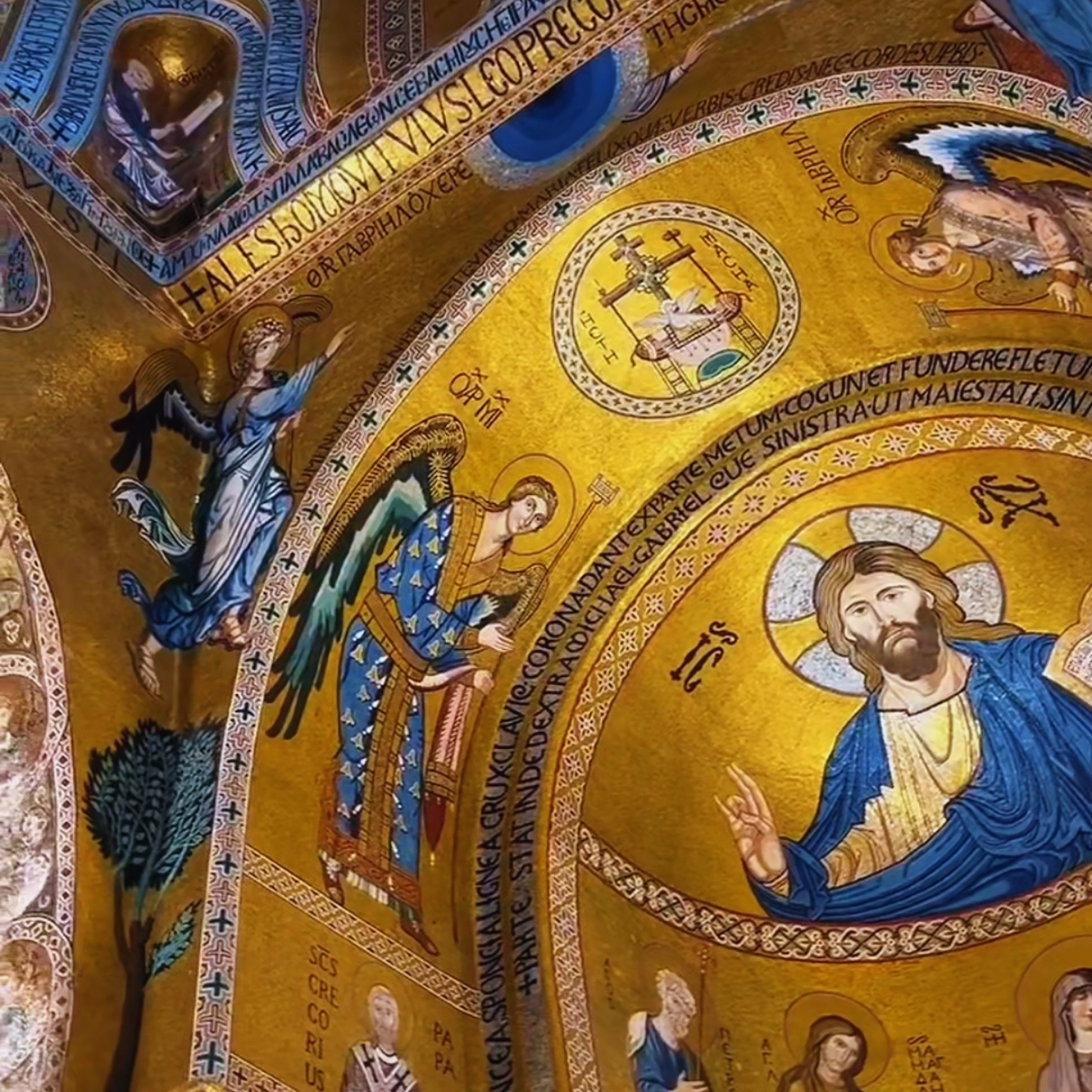
The Palatine Chapel is one of the most beautiful interior spaces in all of Italy. A 12th-century Arab-Norman royal chapel of staggering artistic ambition, built by Roger II and representing the unique fusion of three great civilizations at their creative peak. The walls and apses are entirely covered in shimmering gold Byzantine mosaics of the highest quality; the ceiling is a Fatimid honeycomb muqarnas of Islamic geometric mastery; and the floors and lower walls are richly inlaid marble in cosmati work. Nothing quite like it exists anywhere else in Europe. It is the single most remarkable thing in Palermo, and arguably in all of Sicily.
- The gold Byzantine mosaics, covering the walls, apses, and upper surfaces of the chapel in extraordinary detail. The Christ Pantocrator in the central apse is particularly magnificent. Look closely at the narrative biblical scenes along the nave walls.
- The muqarnas ceiling, the wooden stalactite ceiling above the nave is a masterpiece of Fatimid Islamic craftsmanship, painted with scenes of courtly life, animals, and geometric patterns. Bring binoculars or a camera with zoom for detail.
- The marble floors and lower walls, intricate cosmati patterning in colored marble that completes the three-civilization decorative program of the chapel.
- The Norman Palace rooms, included in the combined ticket, the palace's Sala di Ruggero (Roger's Hall) is adorned with mosaics of hunting scenes that offer a window into 12th-century Norman court life.
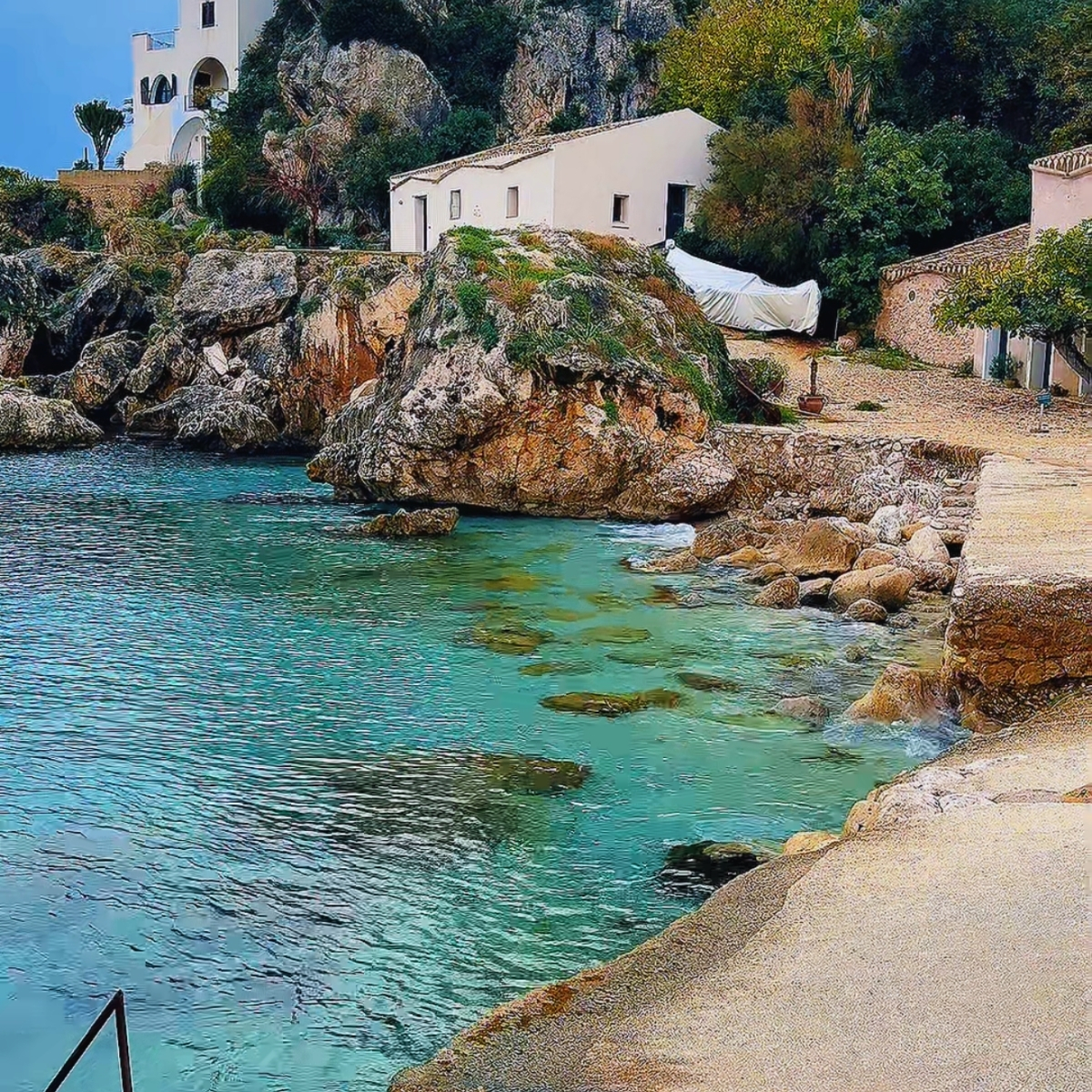
Tonnara di Scopello is Sicily's most iconic and photographed cove. It's a former 13th-century tuna fishing village set among dramatic Faraglioni limestone sea stacks rising from crystal-clear turquoise water. The combination of ancient stone buildings, dramatic rock formations, and the extraordinary color of the sea in this sheltered bay creates a scene of almost overwhelming beauty. Day visitors access the cove during opening hours; overnight guests at the Tonnara hotel (which operates inside the historic buildings) have private access at dawn and golden hour when the light is most extraordinary.
- Swimming in the cove, the water around the Faraglioni is clear, deep, and brilliantly colored. Snorkeling reveals extraordinary underwater rock formations and marine life.
- The Faraglioni sea stacks, the dramatic rock pillars rising from the sea define the Scopello cove and provide the backdrop for some of western Sicily's finest photography.
- The historic tonnara buildings, the restored 13th-century tuna fishery structures add historical depth to the natural beauty of the site.
- Photography at golden hour, the light on the sea stacks in the late afternoon turns extraordinary. If staying overnight, you can swim here in near-total solitude after day visitors leave.
- Zingaro Nature Reserve, Sicily's first nature reserve is adjacent and accessible by a coastal footpath from Scopello. The reserve's dramatic coastline, sea caves, and bird life make it one of the finest coastal walks in Italy.
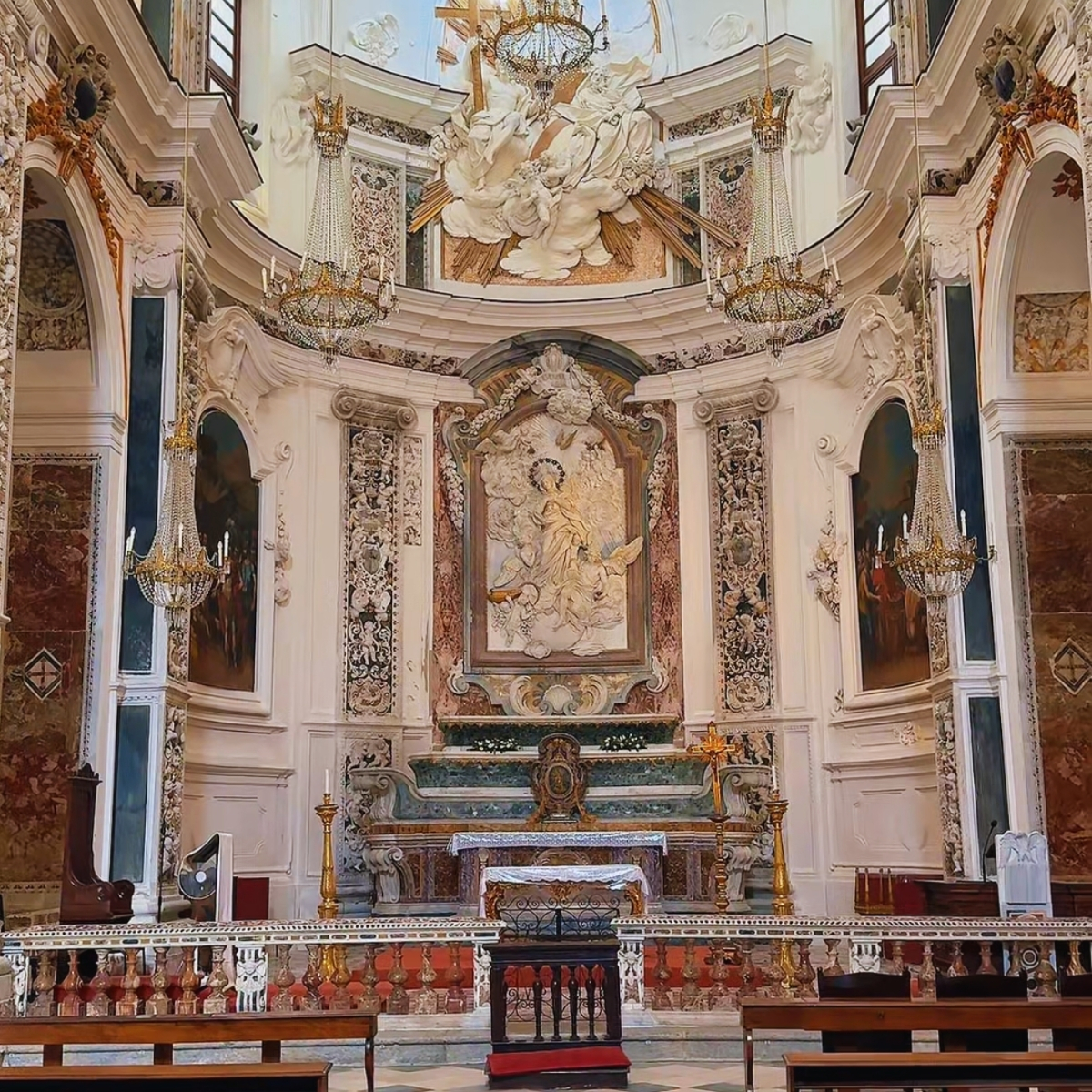
The Cathedral of San Lorenzo is the serene architectural heart of Trapani's historic old town. A beautiful 15th-century church with an elegant Baroque facade and remarkably peaceful interior that offers a genuine moment of calm amid the city's lively maritime energy. It's the perfect contemplative pause in a day of exploring Trapani's port, salt pans, and busy market streets, and an essential stop for understanding the city's layered Catholic and maritime heritage.
- The cathedral interior, serene Baroque nave, significant artworks including a Crucifixion traditionally attributed to Van Dyck, and exceptional decorative marble work.
- Torre di Ligny, the 17th-century Spanish watchtower at the western tip of Trapani's promontory, with sweeping sea views over the Egadi Islands.
- Trapani salt pans (Saline di Trapani), the ancient salt flats south of the city, studded with historic windmills. The sunset light over the salt pans and their flamingo populations is one of western Sicily's most photographed and spectacular moments.
- Trapani's waterfront promenade, the Lungomare at evening aperitivo hour, watching the Egadi Islands' silhouettes against the Tyrrhenian sunset, is one of the finest evening rituals in western Sicily.
- Mercato del Pesce (fish market), the morning fish market gives a vivid snapshot of Trapani's working port culture and the extraordinary seafood abundance of these waters.
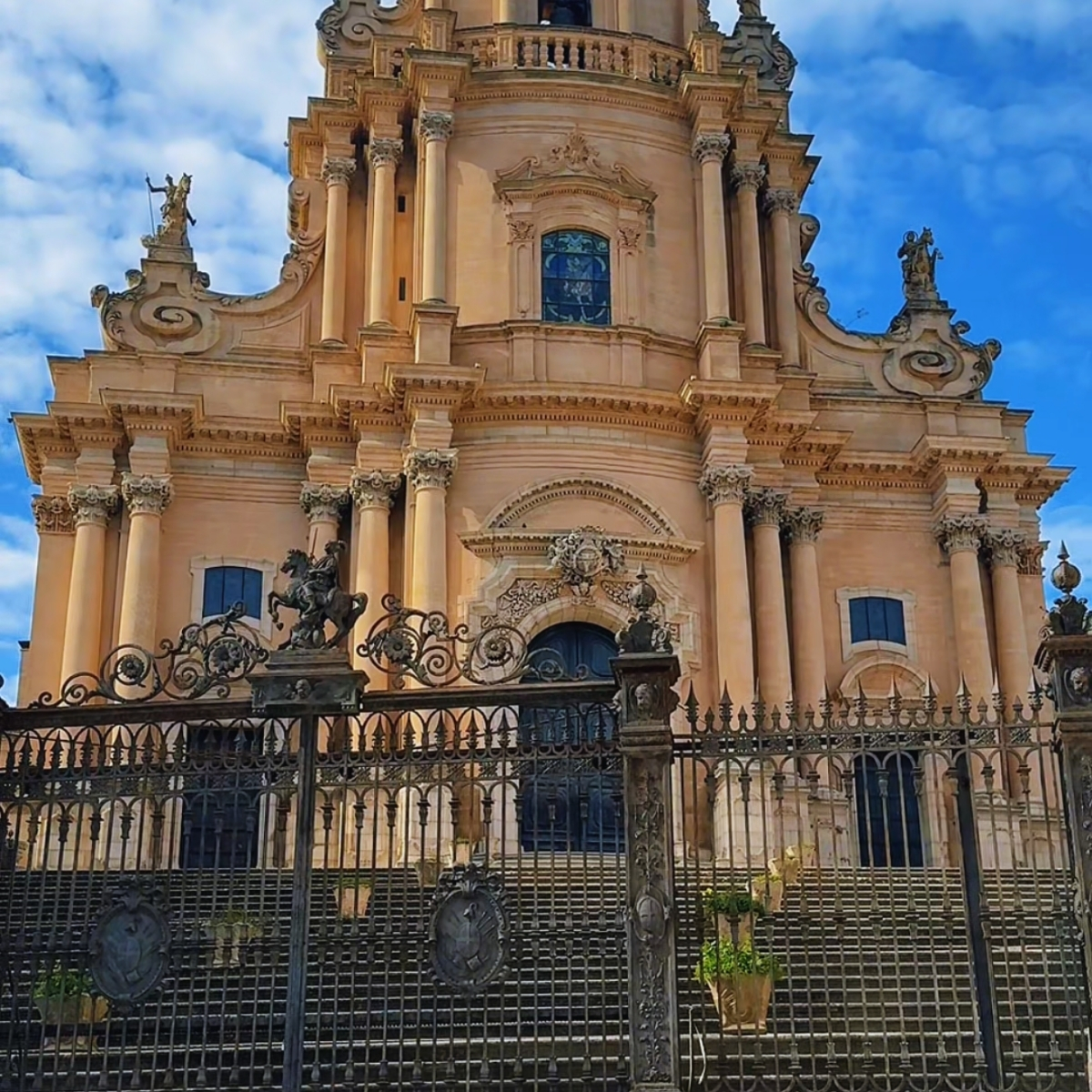
The Duomo di San Giorgio is the crowning achievement of Sicilian Baroque architecture. A magnificent 18th-century church rising at the top of a grand external staircase above one of the most beautiful piazzas in southern Italy. Rebuilt after the catastrophic 1693 earthquake that destroyed much of southeastern Sicily, the Duomo's three-tiered Baroque facade of extraordinary decorative richness is the visual and spiritual heart of Ragusa Ibla, the ancient lower quarter of the city. Visiting at golden hour, when the warm Sicilian light catches the carved limestone and the piazza below fills with evening strollers, is one of Sicily's definitive travel experiences.
- The Duomo facade, the three-tier Baroque composition with its columns, pilasters, and sculptural decoration is the work of the architect Rosario Gagliardi. Climb the external staircase for a close-up view of the craftsmanship.
- The interior and dome, the dome offers panoramic views of Ragusa's surrounding valley and countryside (confirm visiting hours locally).
- Piazza Duomo, the piazza at the base of the staircase is one of Sicily's most photographed public spaces, particularly beautiful in the evening when locals gather for the passeggiata.
- Ragusa Ibla streets, the old lower quarter's winding lanes, ornate palazzos, and quiet piazzas feel genuinely cinematic, Ragusa Ibla has served as a filming location for Inspector Montalbano and retains its atmosphere completely.
- Giardino Ibleo, the public garden at the eastern edge of Ragusa Ibla, with views over the surrounding valley. A beautiful, quiet spot for late afternoon.
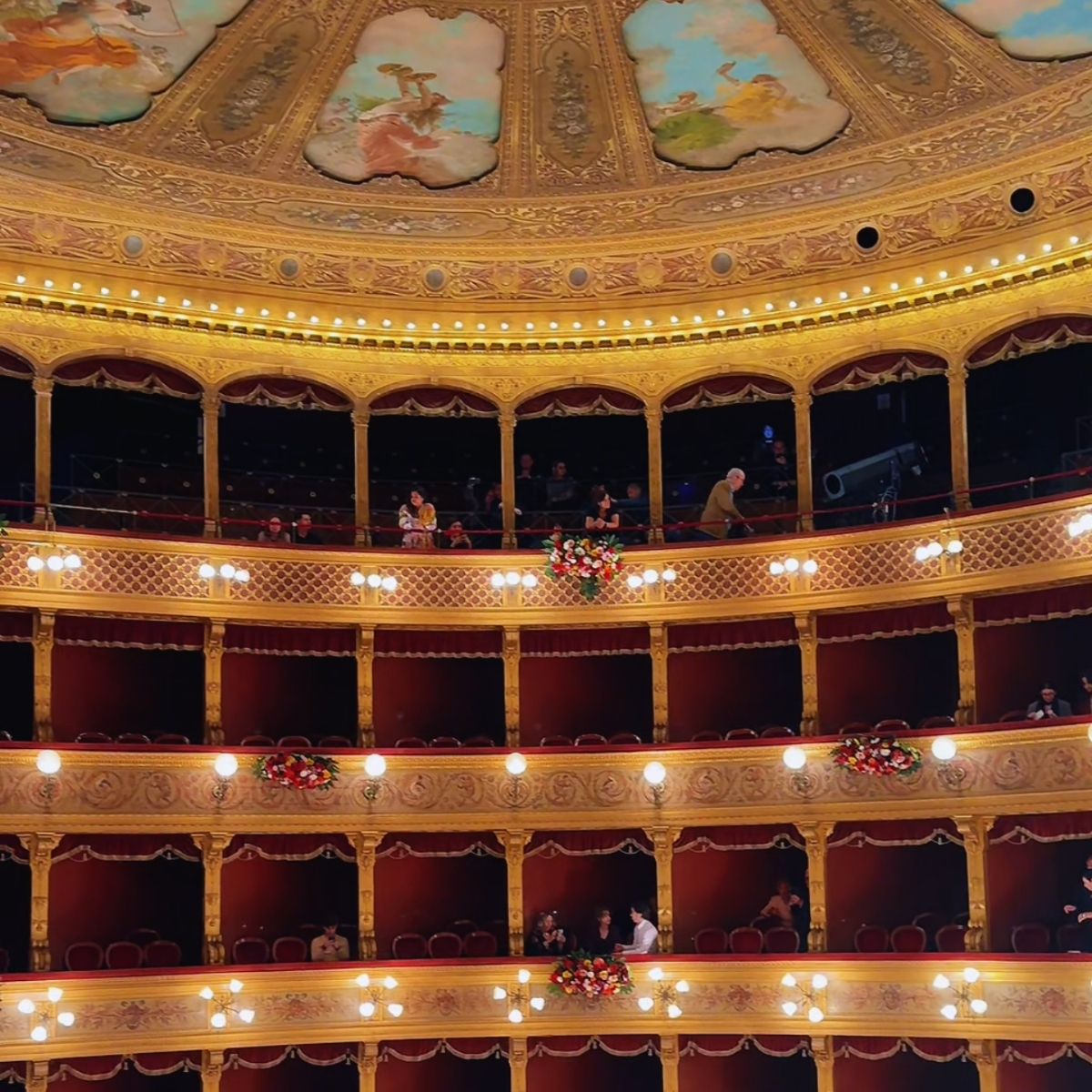
Teatro Massimo is the largest opera house in Italy and the third largest in Europe. A monumental neoclassical building completed in 1897 after 22 years of construction, that looms magnificently over Piazza Verdi in central Palermo. Even without seeing a performance, the guided tour of its lavish interiors, the gilded auditorium, the grand staircase, the backstage mechanics, and the famous echo chamber, is one of Palermo's most rewarding experiences. Film enthusiasts will recognize the iconic grand staircase from the climactic scene of The Godfather Part III.
- The grand auditorium, six tiers of gilded boxes surrounding a stage of exceptional scale. The acoustic engineering and decorative opulence of the 1890s interior are remarkable even by the standards of the great European opera houses.
- The grand staircase, the monumental exterior staircase descending to Piazza Verdi, made internationally famous by The Godfather Part III's closing sequence.
- The echo chamber, a domed room where whispered sound travels around the circumference of the dome in a remarkable acoustic phenomenon; the guided tour demonstrates it dramatically.
- Backstage tour, the guided tour accesses backstage areas including the stage machinery, dressing rooms, and technical infrastructure of one of Europe's great opera houses.
- Evening performance, if Teatro Massimo's season aligns with your visit, attending an opera or ballet is one of the finest cultural experiences Sicily offers. Check the programme at teatromassimo.it before your trip.
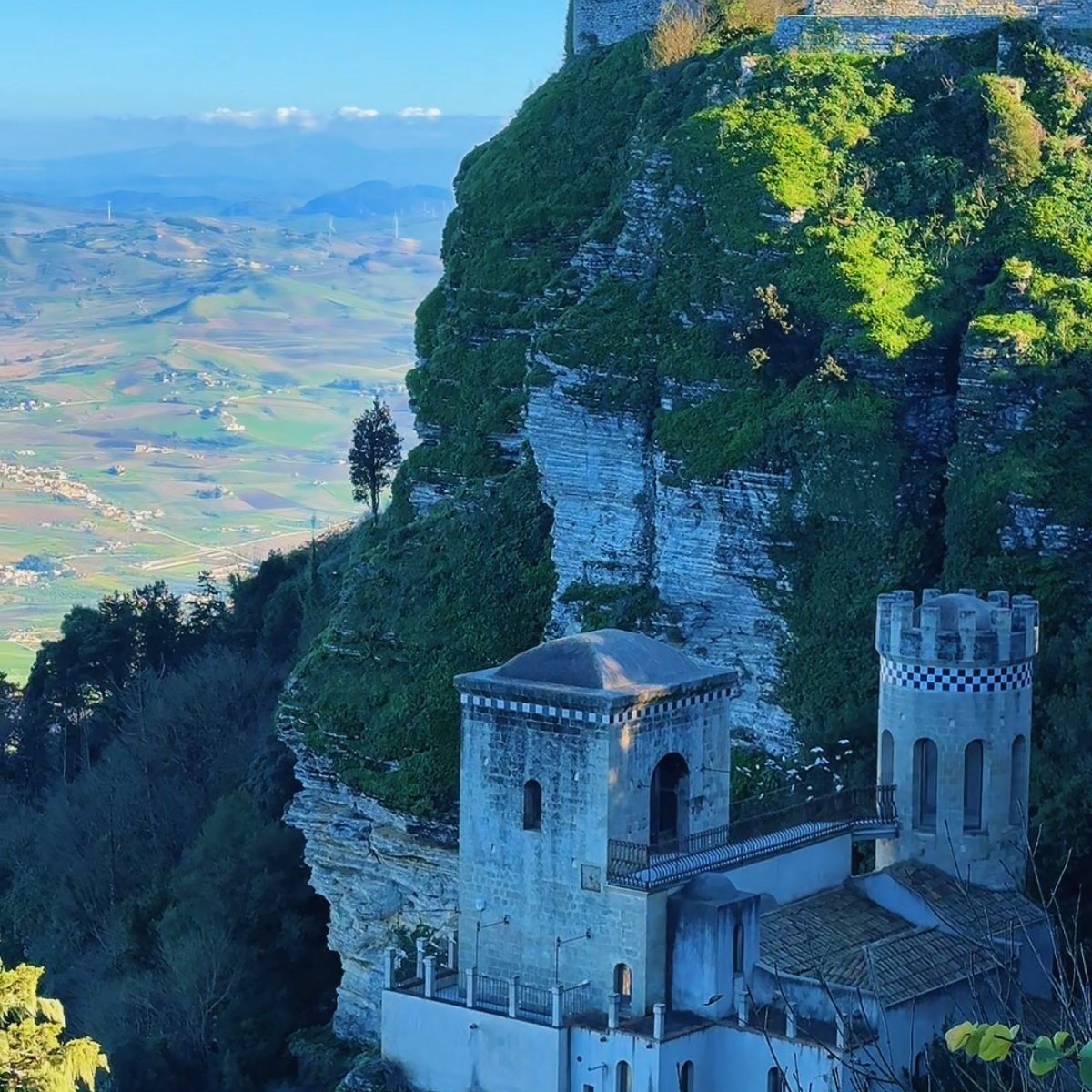
Perched at 750 meters above sea level on the summit of Mount Erice, the Norman Castle of Venus, built over an ancient Phoenician and Greek sanctuary to the goddess Aphrodite/Venus, offers one of the most dramatic panoramic views in all of Sicily: the Trapani coastline, the salt pans with their windmills, the Egadi Islands floating offshore, and on clear days the coast of Tunisia. The medieval hilltop town of Erice that surrounds it, full of cobblestone streets, stone houses, mist-wrapped piazzas, and legendary pastry shops, is itself one of western Sicily's most atmospheric and rewarding destinations.
- The panoramic view from the castle walls, on a clear day the view stretches from the Trapani salt pans to the Egadi Islands and, remarkably, to the coast of North Africa. The best visibility is typically in spring and fall mornings.
- The castle and Venus gardens, the Norman fortification built over the ancient sanctuary retains significant medieval walls and a romantic internal garden.
- The cable car from Trapani, the funivia from Trapani to Erice offers spectacular views over the coastline during the ascent and is the most scenic way to arrive. Confirm operating status before your visit as maintenance closures occur.
- Erice's medieval streets, the town's cobblestone lanes and quiet piazzas deserve at least 2 hours of slow wandering. The atmosphere, often wrapped in coastal mist, is unlike anywhere else in Sicily.
- Pasticceria Maria Grammatico, Erice's legendary pastry shop, famous for almond-paste confections and traditional Sicilian pastries. A stop here is mandatory; buy a bag of almond sweets to take away.
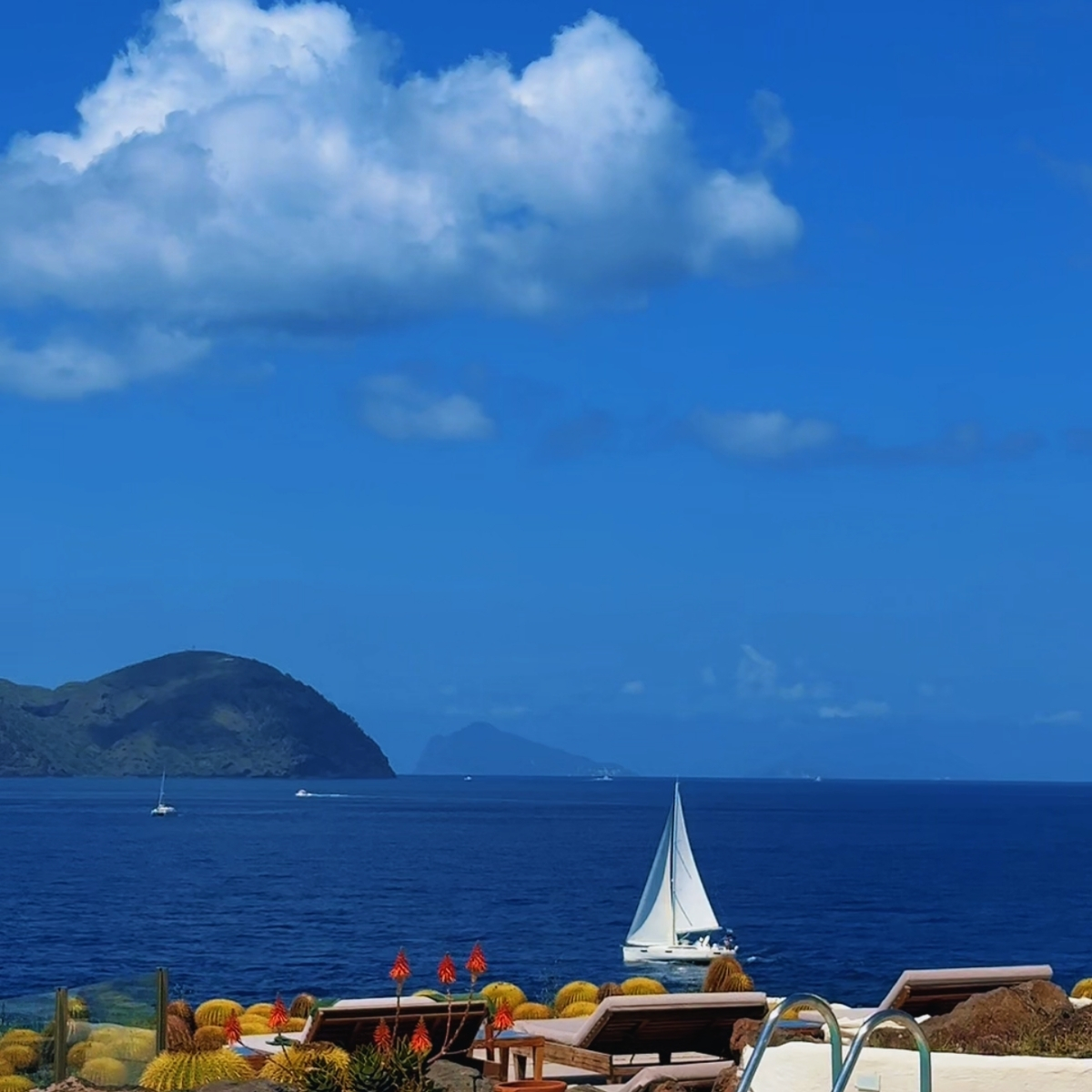
Vulcano is the southernmost of the seven Aeolian Islands. A raw, dramatic volcanic island of sulfur vents, black sand beaches, natural mud baths, and a still-active crater that offers one of the Mediterranean's most otherworldly landscapes. The island's combination of geological drama, extraordinary sea clarity, thermal spa experiences, and sweeping views of the Aeolian archipelago (with Stromboli's volcanic smoke visible on the horizon) makes it uniquely compelling. Staying at Therasia Resort on the island's promontory, with its cliffside infinity pools and Michelin-starred restaurant, transforms the visit into one of Sicily's most extraordinary hotel experiences.
- Gran Cratere hike, the summit crater hike is 1.5–2 hours round trip on a well-marked path through volcanic ash, sulfur vents, and otherworldly geological formations. The 360 degree views from the rim encompass the entire Aeolian archipelago. Medium difficulty; bring water and sturdy shoes.
- Black sand beaches, Spiaggia Sabbie Nere is Vulcano's most famous beach, with warm volcanic black sand created by eruptions. The thermal activity warms the shallow water at the beach's edge noticeably.
- Sulfur mud baths (Laghetto di Fanghi), the natural volcanic mud pool near the port is said to have therapeutic properties and is a Vulcano institution. Rich in sulfur and minerals; the smell is unmistakable. Check current operating status before visiting as closures occur periodically.
- Private boat charter, hire a boat to explore Vulcano's sea caves, swim around the island, or sail to neighboring Lipari and Salina. The boat journey to Stromboli at sunset, watching eruptions from the sea, is one of the finest experiences in the entire Mediterranean.
- Therasia Resort Sea & Spa, the clifftop resort with infinity pools, Michelin-starred Il Cappero restaurant, and views over the entire archipelago is one of Sicily's most extraordinary places to stay.
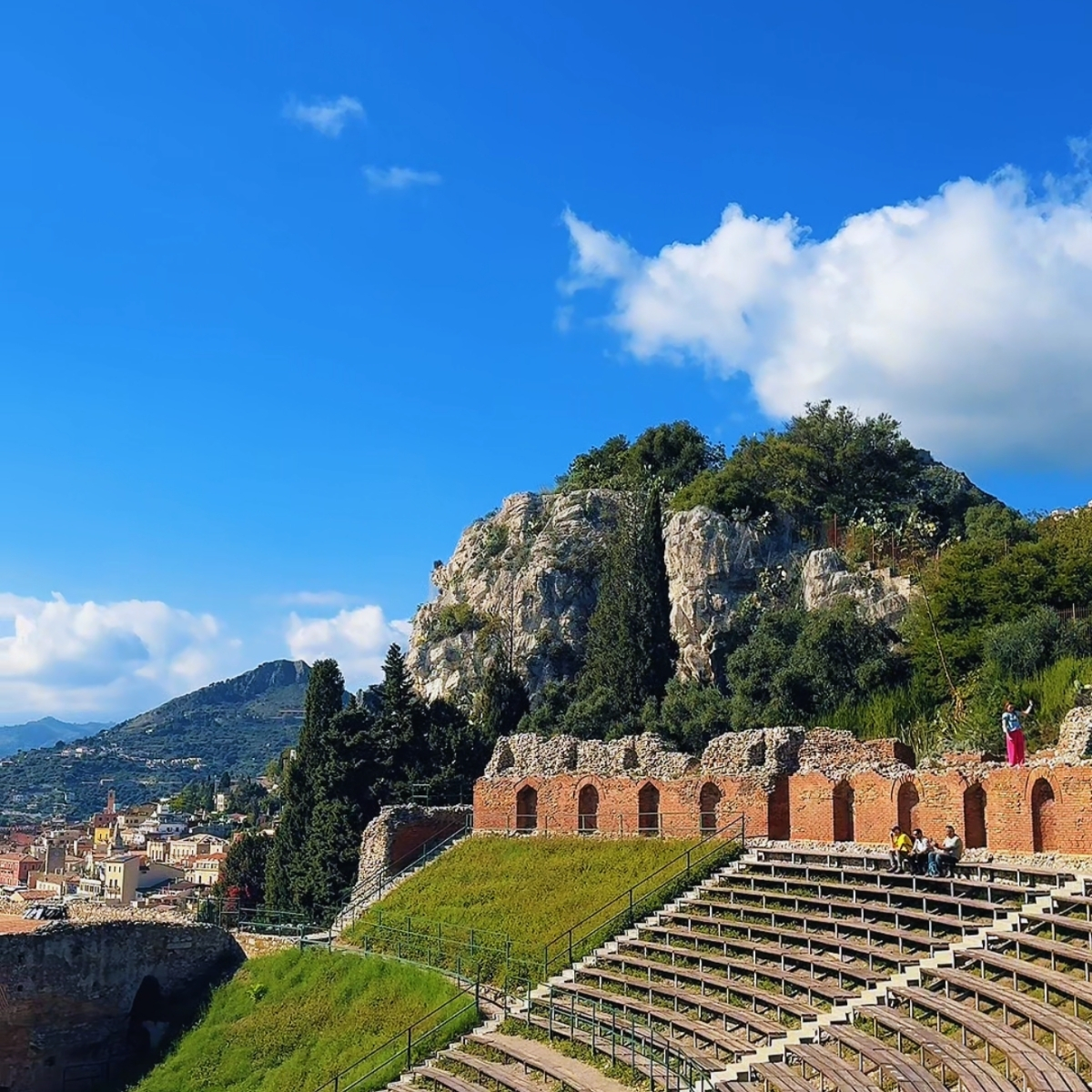
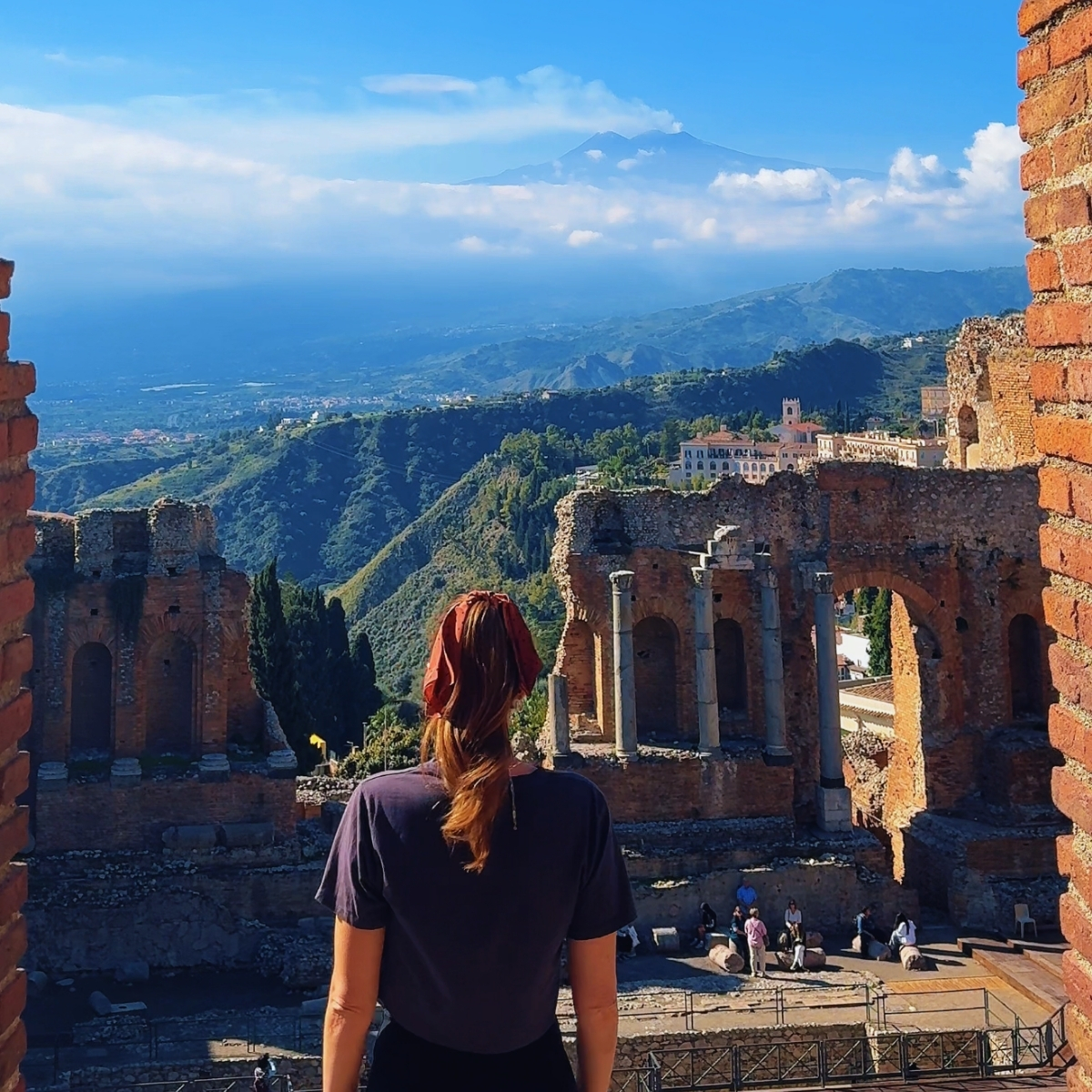
The Ancient Theatre of Taormina (Teatro Antico or Teatro Greco) occupies what is arguably the most spectacular setting of any ancient theatre in the world. A 3rd-century BC Greek structure (later enlarged by the Romans) perched on Taormina's clifftop, with its stone orchestra and Roman brick stage framing a backdrop of the Ionian Sea and, on clear days, Mount Etna's snow-capped cone rising dramatically above the coastline. Standing in the cavea looking toward the stage, with this view beyond, is one of the genuinely unforgettable travel experiences Sicily offers.
- The stage-sea-Etna view, the theatre's defining experience. Position yourself in the upper seating tiers for the full compositional sweep of blue sea, Roman stage arches, and the volcanic cone beyond.
- Sunrise visits, the theatre opens at 9am but arriving early captures Taormina before the crowds build and the morning light illuminates Mount Etna most dramatically. In summer, consider a sunrise entry if the site permits early access.
- Summer concerts and performances, Taormina Arte hosts an internationally acclaimed summer arts festival (June–August) using the ancient theatre as its stage. Attending a performance in this setting is one of Sicily's most memorable cultural experiences.
- The archaeological detail, beyond the famous view, the theatre itself is architecturally fascinating: Greek cavea, Roman stage building (scaenae frons), and Hellenistic architectural elements in an extraordinary state of preservation.
- Taormina's Corso Umberto, the town's main pedestrian street runs from the theatre toward the public garden and Piazza IX Aprile, with exceptional views over the Ionian coast, chic boutiques, and the best gelato in eastern Sicily at Bam Bar.
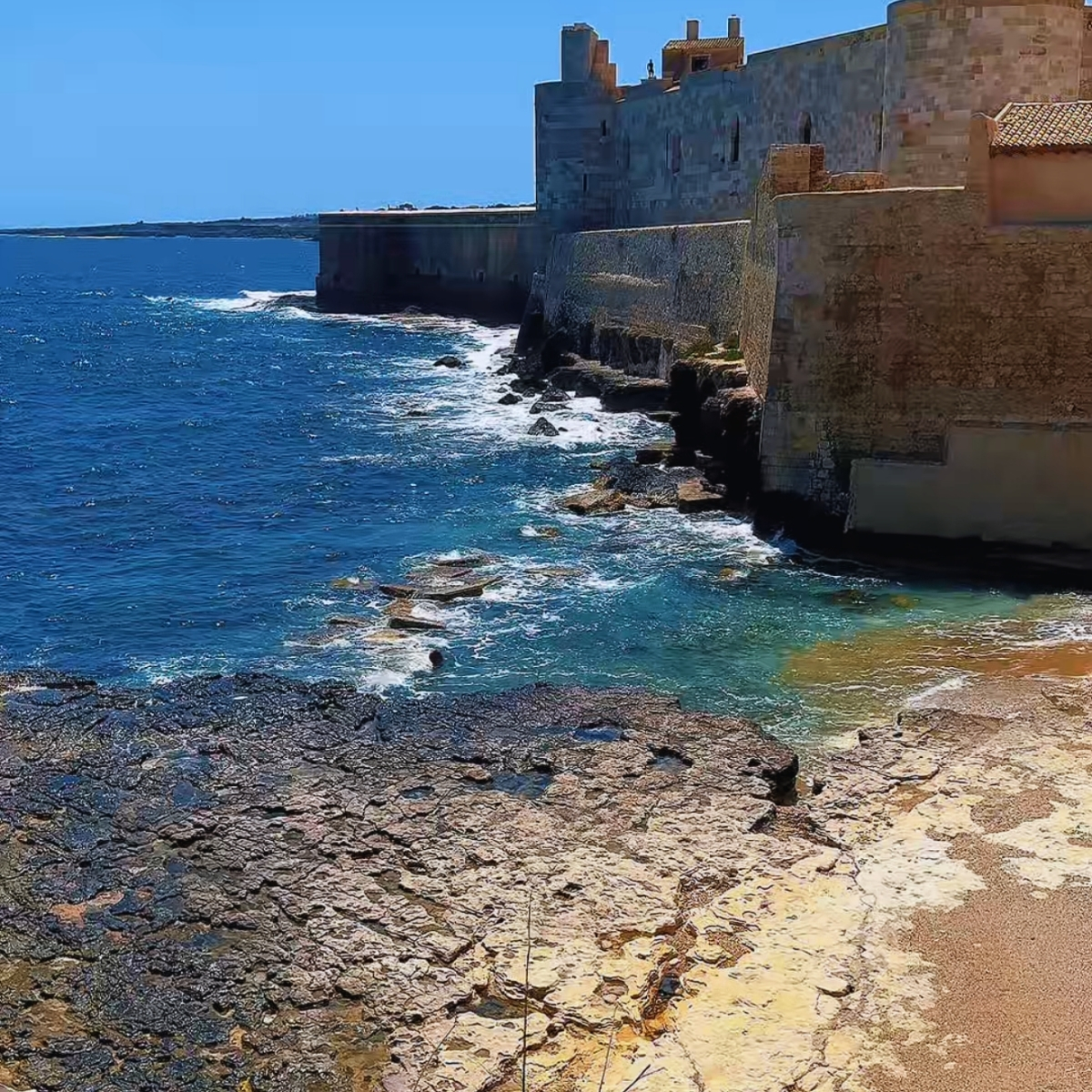
Castello Maniace occupies the dramatic southern tip of Ortigia (the ancient island heart of Siracusa). This 13th-century fortress was built by the Holy Roman Emperor Frederick II. Its massive stone courtyard, sea-carved walls, and the extraordinary coastal views represent both a remarkable feat of medieval military architecture and one of the most dramatically located historic buildings in all of Sicily.
- The castle's sea walls and courtyard, the massive stone interior courtyard, the sea-carved external walls, and the view from the fortress tip directly over the open Mediterranean are the architectural highlights.
- Ortigia's historic center, the island is a UNESCO World Heritage Site in its own right, with extraordinary Baroque architecture, the Cathedral built inside a Greek temple (Duomo di Siracusa), the Fontana di Aretusa, and one of Sicily's finest intact historic urban fabrics.
- Duomo di Siracusa, one of the most remarkable churches in Sicily, built directly incorporating the columns of a 5th-century BC Greek temple to Athena. The Doric columns are still visible in the nave walls.
- Fontana di Aretusa, the ancient freshwater spring on the seafront of Ortigia, surrounded by papyrus (the only place papyrus grows wild in Europe outside Egypt), and full of fish. A tranquil, historically resonant spot.
- Sunset aperitivo on Ortigia's waterfront, the passeggiata along Ortigia's Lungomare Alfeo at sunset, with the Ionian Sea glittering and the castle silhouetted behind, is one of Sicily's finest evening experiences.
Sicily Insider Tips for Visiting These Sights
Pre-book tickets for all major sites. The Valley of the Temples, Teatro Antico Taormina, Palatine Chapel, and Tonnara di Scopello all benefit enormously from advance online booking, particularly between June and September. Walking up without a reservation at any of these risks lines of 1–2 hours or entry being unavailable entirely. Book as soon as your travel dates are confirmed.
Visit outdoor sites at golden hour. The Valley of the Temples, Ragusa Ibla's Duomo, and Taormina's Ancient Theatre are all dramatically transformed by morning and evening light. Dawn at the temples, late afternoon at Ragusa's Baroque piazza, and early morning at the Teatro Antico are consistently better experiences than midday visits at every season, and the crowds are significantly thinner outside peak hours.
Rent a car for the western and southern sights. Scopello, Erice, the Valley of the Temples, and Ragusa are all significantly less rewarding without a rental car as they are either inaccessible or require complex bus connections. Palermo, Cefalù, and Taormina are reachable by train; everything else on this list benefits from having your own transport.
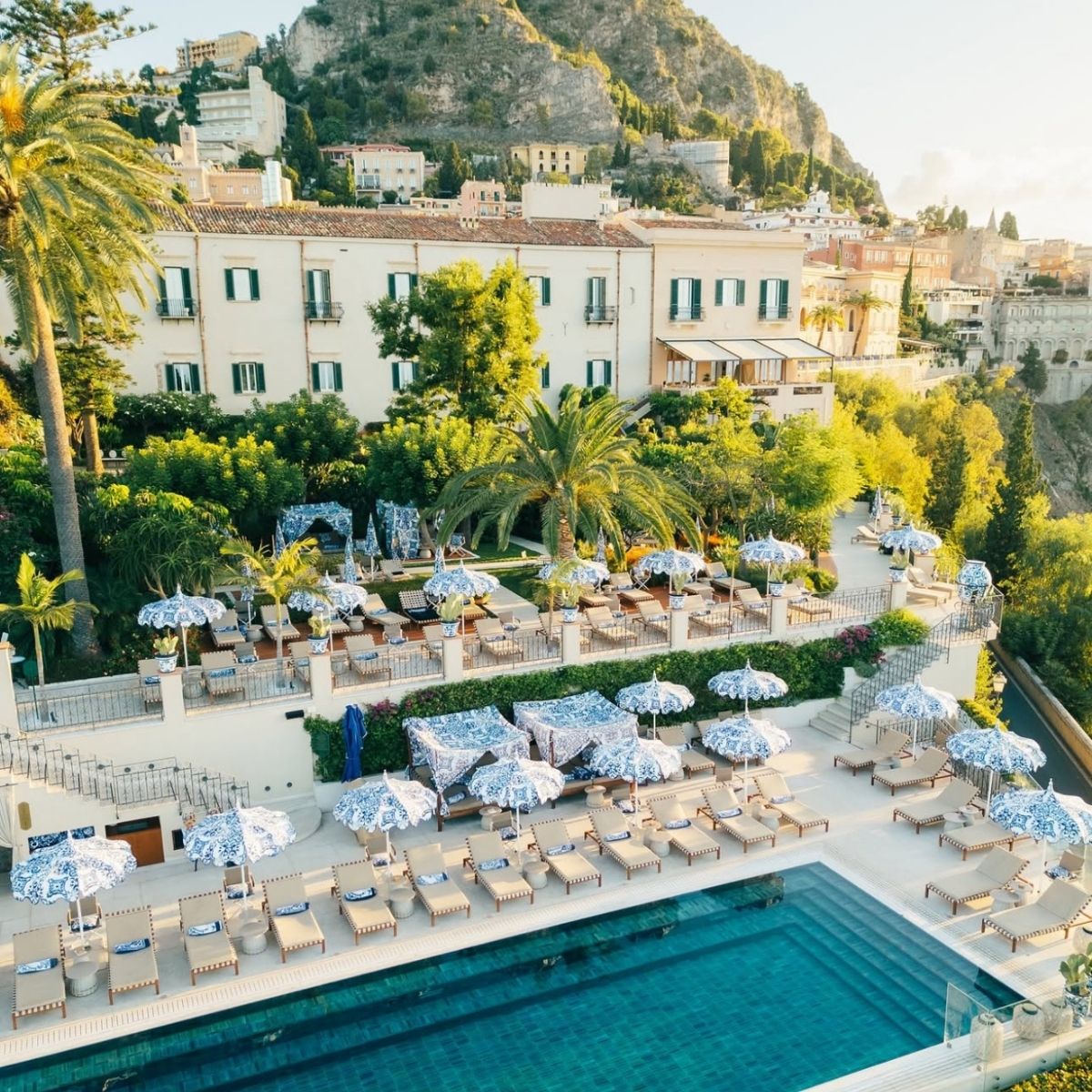
Stay near your key sights where possible. Villa Athena inside the Valley of the Temples archaeological park gives private dawn and dusk access to the ruins. Mazzarò Sea Palace puts Taormina's cable car to the theatre on your doorstep. Therasia Resort on Vulcano transforms a day visit into a multi-day extraordinary experience. The right hotel dramatically elevates each sight on this list.
Allow Ortigia at least a full afternoon. Siracusa's Ortigia island is one of the most beautiful small historic islands in the Mediterranean and is consistently underestimated by travelers who budget a single hour for the Castello. The Cathedral inside a Greek temple, the Fontana di Aretusa, the food market, and the waterfront passeggiata all deserve unhurried time. Come for the afternoon, stay for the sunset aperitivo.
Buy the Palatine Chapel combined ticket. The 19 euro combined ticket for the Palatine Chapel and the Norman Palace rooms is well worth it. The Roger's Hall mosaics and the palace's apartments are impressive additions to the chapel visit. Go first thing in the morning to see the mosaics in the best natural light, before the interior fills with tour groups whose heat and breath (genuinely) affect the viewing conditions.
Sicily Travel FAQs
Everything you need to know before visiting Sicily's greatest sights, from planning your route to the best time to visit each location.
Sicily's single most famous and most remarkable sight is the Valley of the Temples in Agrigento, a UNESCO World Heritage Site containing some of the best-preserved ancient Greek temples in the world, including the extraordinary Temple of Concordia (430 BC), which is more complete than most temples surviving in Greece itself. Other defining Sicilian landmarks include Taormina's Ancient Greek Theatre with its Mount Etna backdrop, the Palatine Chapel in Palermo with its gold Byzantine mosaics, Ragusa Ibla's Baroque Duomo di San Giorgio, and the volcanic island of Vulcano in the Aeolian Islands.
The best base depends on which sights you prioritize. Taormina is the most glamorous base for eastern Sicily, with access to the Teatro Antico, Mount Etna excursions, Ortigia/Syracuse, and Aeolian Islands ferry connections. Palermo is the best base for western Sicily, with day trip access to Cefalù (45 min), Scopello (1 hr), Erice (1 hr), and Agrigento (2 hrs). Cefalù offers a beautiful mid-point for northern Sicily. For a comprehensive road trip covering all regions, a circular route starting and ending in Palermo or Catania (flying in one, out the other) is the most practical structure.
A minimum of 7 nights covers Sicily's highlights at a reasonable pace. This allows 2 nights in Taormina (Teatro Antico and Aeolian Islands), 1–2 nights in Cefalù, 2–3 nights in Palermo (for the Palatine Chapel, Teatro Massimo, and day trips to Scopello, Erice, and Trapani), and 2 nights in Agrigento or Ragusa. For a fuller experience covering both the west and southeast, including Siracusa, Ortigia, and Noto, allow 10–14 nights. See the 10-Day Sicily Itinerary and 7-Night Sicily Road Trip for detailed routing.
Late spring (May–June) and early fall (September–October) are Sicily's finest travel seasons for visiting these sights. Both offer warm weather ideal for outdoor sites and swimming, significantly smaller crowds at the Valley of the Temples and Teatro Antico, and the warm sea perfect for Scopello and Vulcano. September is particularly special: the sea is at its warmest from summer, the light turns golden and cinematic across the landscape, and the island feels authentically local rather than overwhelmingly touristic. Summer (July–August) is very hot for outdoor archaeological sites, visit between 7–9am or after 5pm only.
A rental car is highly recommended for seeing the full range of Sicily's sights. Palermo, Taormina, and Cefalù are accessible by train, and the Valley of the Temples is reachable by transfer from Agrigento. But Scopello and the Zingaro Nature Reserve, Erice (cable car from Trapani, then car for flexibility), Ragusa's southeastern baroque cluster, and the full western Sicily circuit (Trapani, Erice, Scopello, San Vito Lo Capo) are all significantly better with a car. Pick up at Palermo Airport for western Sicily coverage or Catania Airport for eastern Sicily, or fly into one and out the other for a one-way road trip.
The Valley of the Temples (Valle dei Templi) in Agrigento is a UNESCO World Heritage Site and one of the ancient world's most extraordinary surviving monuments, a series of monumental Doric temples built by Greek colonists in the 5th century BC, set among olive groves with sea views in the distance. The Temple of Concordia is one of the best-preserved Greek temples anywhere in the world, more complete than most temples surviving in Greece itself. The site covers a vast area and rewards slow exploration over 3–4 hours, particularly at golden hour when the honey-colored limestone glows most dramatically. Staying at Villa Athena (the only hotel inside the archaeological park) gives private dawn and dusk access at the finest times of day.
Absolutely, the Palatine Chapel (Cappella Palatina) is one of the most beautiful interior spaces in all of Italy and arguably the single most remarkable thing in Palermo. The 12th-century Arab-Norman royal chapel is entirely covered in gold Byzantine mosaics of extraordinary quality, with a wooden muqarnas ceiling of Islamic geometric artistry above and richly inlaid marble below. It represents a unique fusion of Norman, Byzantine, and Arab aesthetic traditions that exists nowhere else in Europe, the product of a singularly cosmopolitan 12th-century Sicilian court that employed the finest craftsmen from three civilizations simultaneously. Pre-book timed entry in advance, go early for the best light, and allow at least 45 minutes inside.
Sicily's Best Places to Visit, Quick Reference
- Top Priority SightsValley of the Temples (Agrigento) · Palatine Chapel (Palermo) · Teatro Antico (Taormina) · Ragusa Ibla Duomo · Tonnara di Scopello
- Best Western SicilyTonnara di Scopello · Cattedrale di San Lorenzo (Trapani) · Salt pans sunset · Castle of Venus (Erice) · Porta Pescara (Cefalù)
- Best PalermoPalatine Chapel (non-negotiable) · Teatro Massimo · Ballarò Market · Quattro Canti · Palermo Cathedral
- Best Southern & Eastern SicilyValley of the Temples · Duomo di San Giorgio (Ragusa Ibla) · Teatro Antico (Taormina) · Castello Maniace (Ortigia/Siracusa)
- Best Island ExperienceVulcano · Gran Cratere hike · Black sand beaches · Therasia Resort · Private boat to Stromboli at sunset
- Book in AdvanceValley of the Temples · Palatine Chapel · Teatro Antico Taormina · Tonnara di Scopello · Vulcano ferry tickets
- Best Time to VisitMay–June & September–October for ideal weather, manageable crowds, and the finest light for outdoor sights
- Getting AroundRental car recommended · Palermo, Taormina, Cefalù accessible by train · Scopello, Erice, Ragusa require car
- VIP Hotel PerksBook Villa Athena (Valley of Temples), Mazzarò Sea Palace (Taormina), Therasia Resort (Vulcano) through me with complimentary upgrades & breakfast
Quick Travel Resources
Everything I personally use and recommend to make your Sicily trip seamless, from hotel bookings to guided tours and travel essentials.
I book the best-located Sicily hotels, Villa Athena at the Valley of the Temples, Mazzarò Sea Palace in Taormina, Therasia Resort on Vulcano, with complimentary upgrades, breakfast, and resort credits at no extra cost.
Book With Me →The travel insurance I use myself. Covers trip cancellations, medical emergencies, ferry delays, and lost luggage throughout Sicily.
Get a Quote →Browse my curated Sicily tours, skip-the-line Valley of the Temples, Palatine Chapel guided visits, Teatro Antico entry, Aeolian Islands boat tours, Palermo street food. Use code TRAVELINGBALANCED5 for 5% off.
Browse Sicily Tours →Another excellent source for Sicily guided experiences, private tours, cooking classes, Aeolian Islands excursions, and day trips from Palermo, Taormina, and Catania.
Browse Experiences →My go-to for private transfers throughout Sicily, Palermo Airport arrivals, Taormina-to-Milazzo for Aeolian Islands, Valley of the Temples access, and inter-city connections.
Book a Transfer →My curated travel essentials, sun protection for outdoor sites, good walking shoes for crater hikes and valley walks, and everything I actually pack for Sicily.
Shop Now →My curated 7-night Sicily road trip covering Scopello, Trapani, Erice, Valley of the Temples, and Ragusa, with hand-picked hotels and detailed daily planning.
Read the Itinerary →Let me plan your entire Sicily trip, hotels with VIP perks, advance ticket bookings, private transfers, and every detail handled so you simply arrive and experience it all.
Learn More →Final Thoughts: Planning Your Sicily Sightseeing
These 11 sights represent the best of what Sicily offers and even together they barely scratch the surface of an island this layered, this vast, and this historically extraordinary. What they share is the quality that makes Sicily so compelling to every traveler who visits properly: each one feels like something that couldn't exist anywhere else. The Greek temples in the almond groves. The Arab-Norman chapel where three civilizations made something more beautiful together than any one could alone. The volcanic island where the earth still breathes through its craters. The Baroque city rebuilt from earthquake rubble into something more beautiful than before.
Pre-book what needs booking, arrive early at the outdoor sites, stay near the key sights where the hotels allow it, and leave time between the monuments for the things Sicily is equally famous for: the granita, the arancini, the burrata, the Primitivo, the long Sicilian lunches that extend into the afternoon heat. The monuments are extraordinary. The time between them is what makes a Sicily trip unforgettable.
More Italy Resources
Everything you need to plan the rest of your Italy trip, from itineraries to the best hotels across the country.